Quick Answer
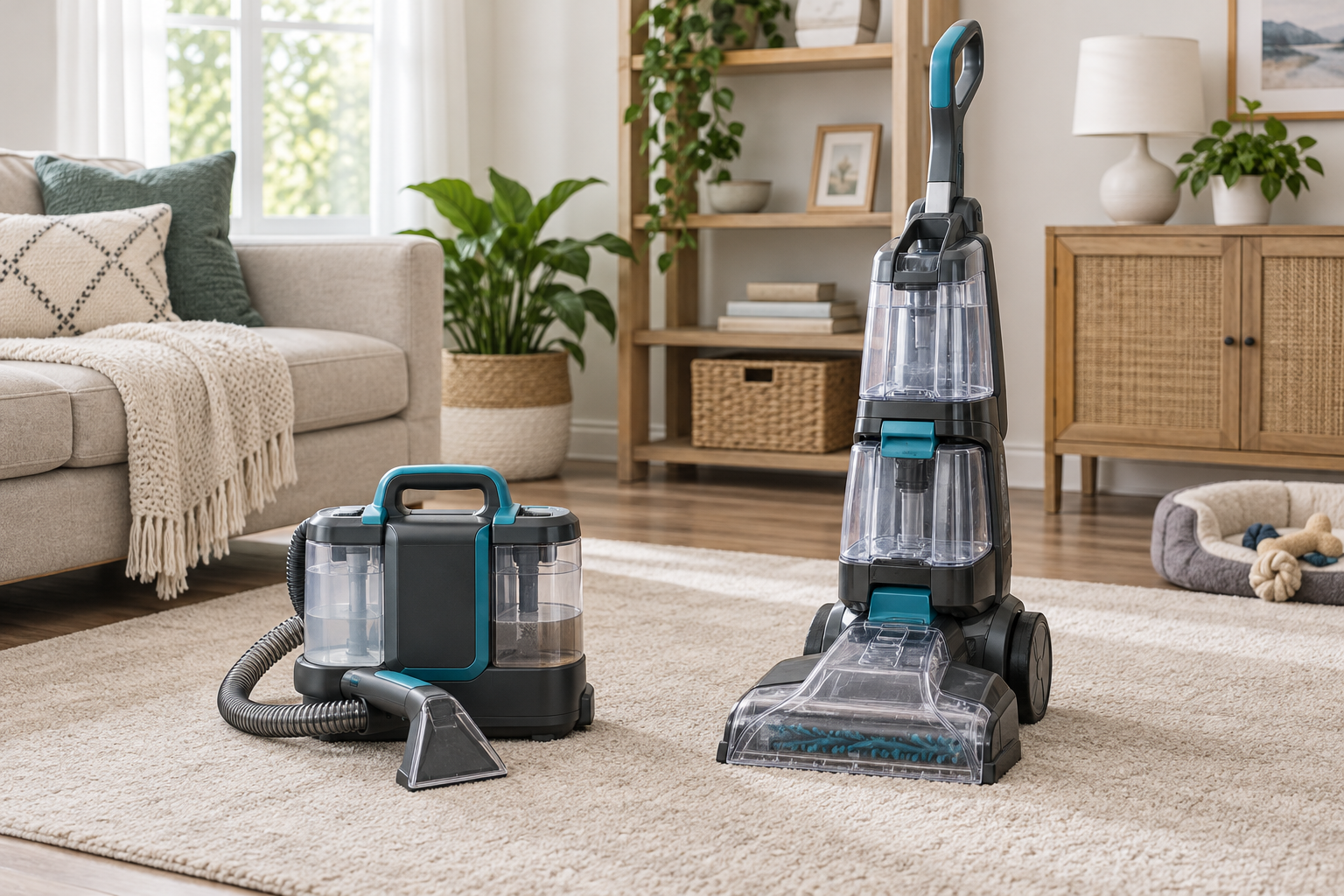
Choose a portable carpet cleaner when the usual job is one spill-sized area, a stair tread, compatible upholstery, or a vehicle surface. The smaller body is easier to place near a target, while the hose and hand tool make you scrub and extract a narrow area manually.
Choose an upright carpet cleaner when the recurring job is an open section of manufacturer-approved carpet and pushing a broad head is more practical than working on hands and knees. Expect a larger storage footprint and more tank, brush, nozzle, and drying work.
Do not buy by the word “pet” alone. Verify the exact surface, fiber, solution, pretreatment, rinse, and drying directions from the carpet or upholstery maker and the machine manual.
Who Each Carpet Cleaner Fits
A portable machine fits targeted cleanup
Portable extractors make sense for repeated small jobs when a hand tool can reach the entire affected area. They can also serve stairs and compatible upholstery if the manufacturer permits those surfaces. Measure the carry route, complete filled weight, hose reach, tool width, and dry storage space.
An upright machine fits larger open areas
Upright extractors favor open carpet where a broad head can move in controlled passes. Compare operating weight, handle angle, cord reach, edge clearance, tank removal, and whether hose tools are included or optional. A larger machine is not automatically better for a single recurring spot.
Practical Tradeoffs
- Coverage: a portable hand tool is precise but slow over a room. An upright covers open floor faster but may not reach stairs, tight edges, or upholstery without approved attachments.
- Handling: a portable unit must be carried and placed securely. An upright stays on the floor but can be heavy to steer, lift over thresholds, or carry between levels.
- Water and solution: either format needs the maker-specified water temperature, formula, fill lines, and dosing. Extra solution can mean more residue and longer drying; do not improvise mixtures.
- Maintenance: both require dirty-water disposal, tank rinsing, debris removal, and complete drying. Uprights add a wider nozzle and brush area; portables add a hose and compact hand tool.
- Storage: a portable cleaner needs room for the dry hose, tool, cord, and tanks. An upright needs vertical clearance and stable floor space, plus room for accessories.
- Cost: compare approved formula, replaceable parts, storage, and after-use cleaning time—not just purchase price.
Setup, Use, and Maintenance
First identify the surface and check its care label or manufacturer guidance. Vacuum compatible loose dry debris before wet extraction when directed. Test the prescribed setup in an inconspicuous area, keep pets and people away from cords and damp surfaces, and ventilate the room as appropriate.
For a portable cleaner, place the body on a stable protected surface, route the cord and hose away from feet, and keep the tool flat enough to recover moisture. For an upright, clear the room, plan passes so you do not walk across wet carpet, and do not force the head onto edges or excluded surfaces.
After either machine, empty the dirty tank promptly and follow the manual for rinsing tanks, nozzles, brushes, hose, and tools. Let washable parts dry completely before reassembly or closed storage. A carpet cleaner is a convenience tool, not a sanitation guarantee or treatment for recurring elimination.
If a pet suddenly begins having accidents, strains, seems painful, drinks or urinates unusually, or shows another concerning change, contact a licensed veterinarian rather than relying on cleanup equipment.
Who Should Skip Each Format?
Skip a portable cleaner when the normal job is a large open carpet area, kneeling or sustained hand-tool work is uncomfortable, the filled unit is hard to carry, or the hose cannot reach without repeatedly moving the machine.
Skip an upright cleaner when you mainly clean isolated spots, stairs, or upholstery; cannot store it dry and upright; cannot comfortably push, empty, or carry it; or the carpet maker does not permit wet extraction with that machine type.
Skip buying either when the surface requires professional care, an existing approved machine closes the gap, or rentals and professional cleaning better match rare whole-room jobs. Avoid wet extraction on unverified rugs, flooring, upholstery, padding, or damaged areas.
Next Steps for Carpet and Upholstery Cleanup
If a compact machine sounds right, compare portable carpet-cleaner formats for routine pet messes. Before choosing a formula, use the pet stain-remover guide. For dry debris before extraction, compare vacuum attachments for upholstery and stairs.
Bottom Line
A portable carpet cleaner is the practical match for small targeted jobs and tool-based reach. An upright makes more sense for recurring open-floor work on compatible carpet. Let the measured area, surface instructions, handling, after-use care, drying space, and storage decide—then buy only if the machine fills a real routine gap.