Quick Answer
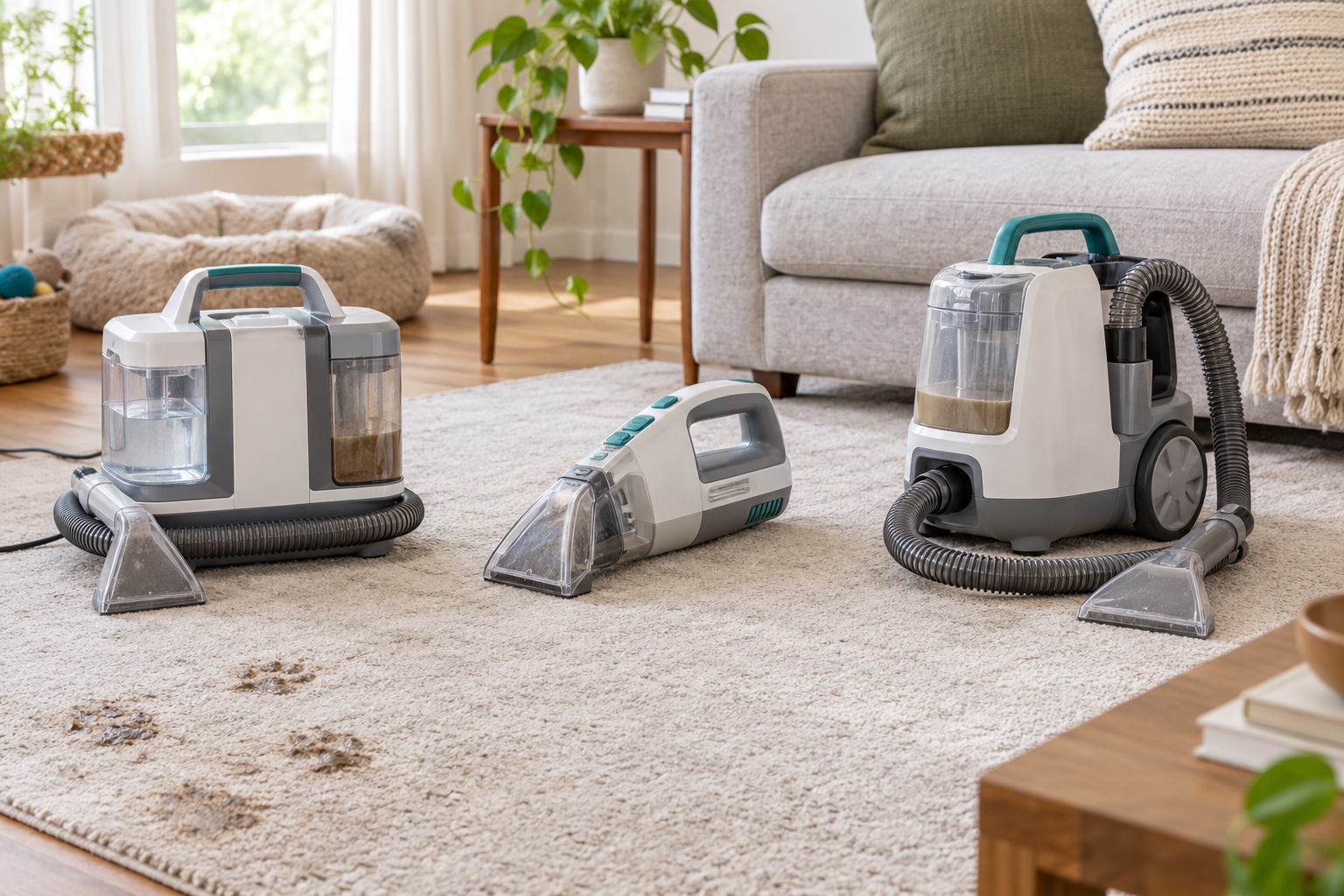
Choose a compact corded spot extractor for recurring small areas when an outlet is close and separate tanks, a hose, and an upholstery tool fit the job.
Choose a cordless handheld extractor for brief, tightly targeted pickup when low carry weight matters and the documented runtime and tank size are enough.
Choose a compact wheeled hose extractor when reach across stairs, a sofa, or several spots matters more than the smallest possible storage footprint.
This page compares machine layouts. For bottled formulas and fabric cautions, use our pet stain-remover guide and enzyme-versus-oxygen cleaner comparison.
Check the Surface Before Buying a Machine
Read the carpet, rug, or upholstery care label before choosing extraction. Some fibers, backings, dyes, cushions, adhesives, and finishes should not be saturated or machine cleaned. Follow both the surface maker's instructions and the exact cleaner manual; when they conflict or the material is unclear, ask the manufacturer or a qualified upholstery or carpet-cleaning professional.
Measure the real job: the largest recurring spot, the distance to an outlet, stair count, sofa depth, and the route from sink to cleaning area. Also identify where filled tanks can be carried and emptied without crossing a pet's path. A machine that reaches the spot but is awkward to rinse and dry may sit unused.
Remove pets from the work area until the surface is dry and the machine, cord, solution, dirty water, and small tools are put away. For urine, vomit, diarrhea, blood, repeated accidents, possible toxin exposure, or any pet that seems unwell, contact a veterinarian as appropriate; a carpet cleaner is a household convenience, not a health solution.
How the Three Formats Differ
Compact corded spot extractors
These usually place clean- and dirty-water tanks in a carryable body connected to a short hose and hand tool. Compare usable tank fill lines, tank removal direction, cord and hose reach, tool width, full carrying weight, and whether the hose and tool can dry before storage. Corded power avoids a battery deadline, but the outlet and cord route must be practical.
This is the broad middle-ground format for repeated spots. Skip it when even a compact body is too heavy when filled, the hose cannot reach the target without moving the machine repeatedly, or the available storage would keep damp parts closed up.
Cordless handheld extractors
A self-contained or short-hose handheld format reduces the cord and carrying footprint. Compare the documented charge and runtime guidance, battery storage, tank size, complete loaded weight, head angle, and whether the tool fits edges and upholstery seams without awkward wrist positions.
Smaller tanks and limited runtime may mean more pauses. Do not assume cordless means easier: filling, emptying, rinsing, battery care, and drying still matter. This format fits small targeted jobs better than broad carpet cleaning.
Compact wheeled hose extractors
A wheeled base can support larger tanks and a longer hose while the hand tool reaches stairs or furniture. Measure the entire base, turning clearance, thresholds, hose route, tool storage, and access needed to remove each tank. Wheels help only on compatible level routes and do not make a filled machine safe to pull by its hose.
This format can reduce machine repositioning across several adjacent areas, but it adds storage volume and more hose to rinse and dry. It is not a substitute for a full-size carpet cleaner when the actual job is an entire room.
A Practical Comparison Framework
- Surface permission: Confirm the exact carpet, rug, or upholstery can be cleaned with the machine and approved solution.
- Reach: Add hose and cord reach only as the manufacturer documents them; do not plan on unsafe extension-cord or machine placement.
- Tank design: Prefer clearly separated clean and recovery paths, accessible fill lines, stable handles, and openings you can reach for rinsing.
- Tool fit: Match tool width and angle to stair treads, cushions, seams, or floor spots rather than buying the largest attachment list.
- Loaded handling: Consider the machine with water in it, including the lift to a sink and the path over thresholds.
- After-use access: Check whether tanks, lids, floats, tools, and the documented hose-cleaning path can be inspected and dried.
- Storage: Reserve ventilated space for a fully dried machine, cord, hose, approved solution, and attachments away from pets and children.
Do not treat heat, suction, or “pet” wording as proof of results. Compare documented functions and the complete ownership routine. No portable format guarantees sanitation, odor removal, stain removal, or compatibility with every household surface.
Plan the Full Cleanup Routine
Before extraction, pick up solids and follow the surface and machine guidance for any preliminary blotting or vacuuming. Use only solutions and quantities allowed by the machine maker; mixing household chemicals or improvising formulas can damage surfaces or equipment and may create unsafe exposure.
Work without over-wetting, following the documented tool passes and recovery procedure. Ventilate as appropriate for the room and surface, keep traffic away, and allow the area to dry fully. If moisture reaches padding, backing, wood, electrical components, or an unknown layer, stop and get appropriate professional advice.
Afterward, unplug or power down the machine as directed. Empty recovery water promptly, rinse the permitted parts, inspect the intake and tool, and let components dry before reassembly. A quick machine is not truly convenient if this after-use routine does not fit your sink, drying space, and schedule.
Who Should Skip Each Format?
Skip a compact corded extractor when outlet placement creates a bad cord route, lifting a filled body is difficult, or the hose does not reach the actual spots.
Skip a cordless handheld extractor when jobs routinely exceed its documented runtime or tank capacity, or when its loaded weight and working angle are uncomfortable.
Skip a compact wheeled extractor when storage is tight, thresholds interrupt the route, or cleaning and drying a longer hose will be unrealistic.
Skip buying any extractor when accidents are rare, the care label discourages wet extraction, an existing rental or professional service fits better, moisture cannot be dried safely, or the real need is broad whole-room cleaning. For a dry floor-hair problem, compare robot and cordless vacuums instead.
Related Cleanup Guides
Choose a compatible formula with the stain-remover buying guide, compare enzyme and oxygen cleaners, or browse the cleanup guide hub for dry hair, muddy-entry, litter, and laundry problems.
Bottom Line
The best portable carpet-cleaner format is the one that matches the permitted surface, the measured spot, and the rinse-and-dry routine you will complete every time. Start with a compact corded unit for a balanced repeat setup, a cordless handheld for brief targeted jobs, or a compact wheeled machine for added hose reach—then verify the exact current machine before buying.