Quick Answer
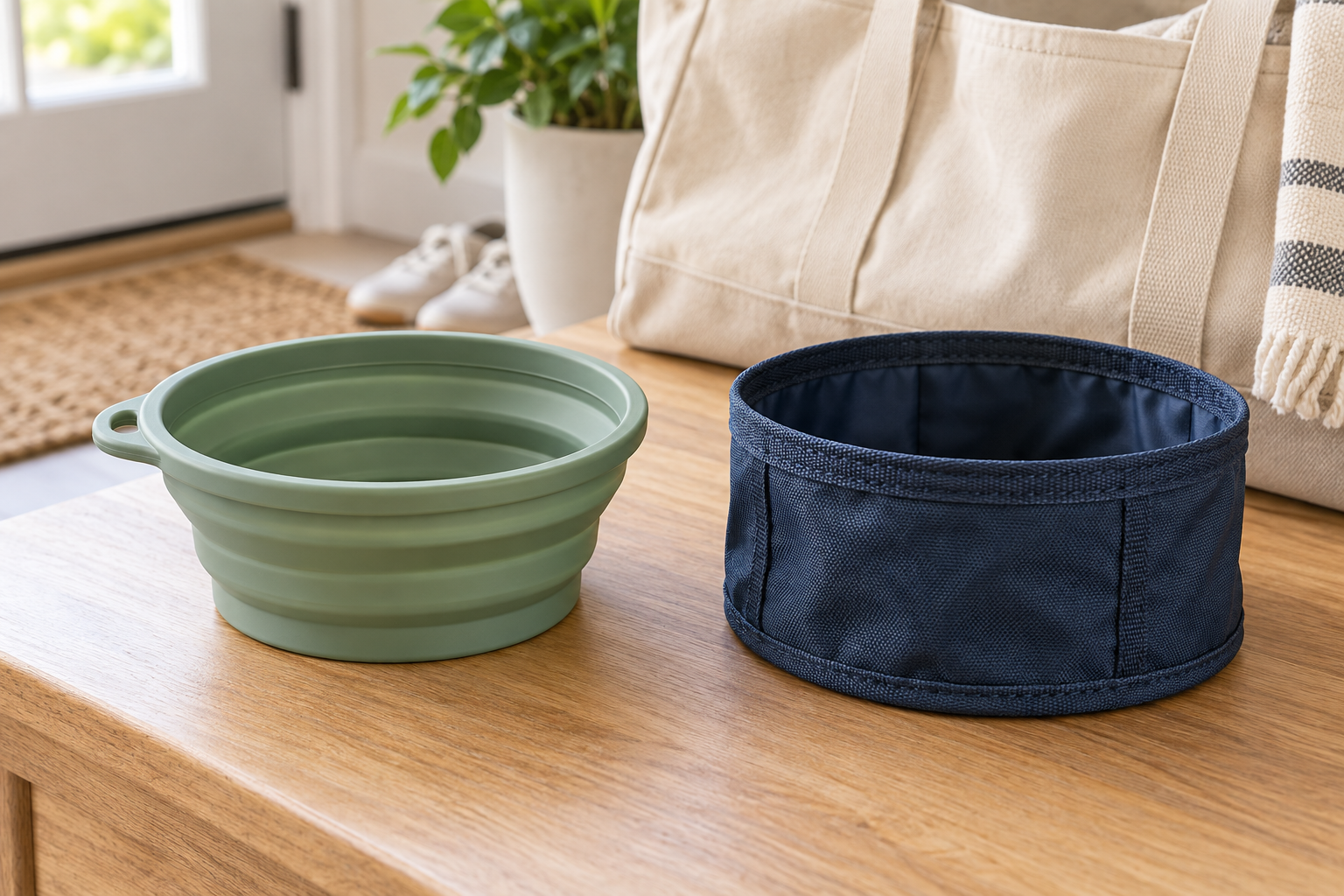
Choose silicone when you want a bowl that expands to a consistent molded profile, sits on a sufficiently broad base, and can be rinsed without stitched seams. It suits totes that have room for the bowl's collapsed diameter.
Choose fabric when a shallow, flexible bundle fits your walking bag better and you can turn out or open the exact construction enough to clean and dry seams, corners, binding, and any lining.
Choose neither yet when the listing omits usable capacity, open and packed dimensions, material information, or care directions. A familiar lightweight rigid bowl may be simpler when most outings start from a vehicle.
Measure the Bowl Open and Packed
- Usable capacity: use the maker's current capacity for the exact size and compare it with the familiar bowl your pet uses; do not rely on “small” or “large.”
- Open diameter and depth: confirm the pet can comfortably reach the bowl without forcing its head into a narrow opening.
- Base: measure the contact area, not just the rim. A wide rim does not guarantee a broad or stable base.
- Packed shape: record the silicone bowl's collapsed diameter and thickness or the fabric bowl's folded width, height, and secured thickness.
- Attachments: include clips, loops, snaps, and folded straps in the bag footprint, and inspect them as conveniences rather than guarantees.
- Care access: check whether your hand or cleaning tool can reach every fold, corner, seam, and binding edge permitted by the instructions.
Practical Tradeoffs
- Shape: molded silicone usually keeps a more defined open profile; fabric depends on its base, side construction, fill level, and placement.
- Packing: silicone often collapses into a broad disc; fabric may fold into a shallower rectangle but can crease irregularly.
- Cleaning: silicone has molded folds to open and inspect. Fabric adds stitched seams, binding, and sometimes layered or coated surfaces.
- Drying: either format must dry fully. Fabric seams and layers may need more open-air time; silicone folds can also hold droplets if collapsed too soon.
- Wear: inspect silicone for tears, sticky changes, cracks, or damaged folds. Inspect fabric for fraying, delamination, exposed reinforcement, loose thread, or leaking seams.
- Handling: a light bowl of either material can shift when nudged. No travel bowl should be treated as tip-proof, chew-proof, or appropriate for unattended use.
Who Each Format Fits
A silicone bowl fits an owner who wants quick setup, can carry its circular collapsed footprint, and prefers molded surfaces over stitched construction. It can be practical for repeated water stops when the exact bowl has an adequate base and can be opened fully for cleaning.
A fabric bowl fits an owner counting every gram or packing a shallow pocket. It can also conform around soft items in a tote. That advantage disappears when the bowl is hard to hold open, tips on the available surface, or cannot be washed and dried promptly after the outing.
Setup, Cleaning, and Maintenance
Introduce the empty bowl at home on a level, easy-clean surface. Open it completely as directed, check that the base lies flat, and add a modest amount of water. Let the pet approach without pressure. Stop if the bowl collapses during ordinary use or the pet chews, paws, or repeatedly avoids it.
After use, empty and wash the bowl according to its current instructions. Open every silicone fold; for fabric, expose permitted seams and corners without forcing a layer apart. Let the entire bowl dry fully before collapsing, folding, closing, or placing it in a storage sleeve intended for a dry bowl.
Retire the bowl if it develops a tear, crack, sticky or peeling surface, persistent odor, exposed reinforcement, loose binding, frayed thread, damaged closure, sharp edge, or an area that no longer cleans predictably. Do not patch a food-or-water contact surface with an improvised adhesive.
Who Should Skip Each Format?
Skip accordion silicone when the folded disc does not fit the bag, the open base is too narrow, your pet crushes the side while drinking, or folds remain inaccessible during cleaning. Skip fabric when seams stay damp, the bowl needs constant hand support, the lining is peeling, or chewing and loose-thread access cannot be prevented.
Skip both when you already own a clean portable bowl that fits, cannot provide a level supervised stop, or will have to seal the bowl while wet. These are convenience products, not hydration or health solutions. Pack suitable fresh water for the outing, and contact a veterinarian if a pet refuses water, drinks markedly more or less than usual, vomits, appears overheated, or seems unwell.
Related Travel-Bowl Decisions
Use the collapsible pet bowl buying guide when you still need to compare sizes and general formats. If you need two bowls, compare folding and nesting bowl sets. For a different packed construction, see clamshell versus roll-up travel bowls, then plan the rest of the bag with the everyday pet outing kit.
Bottom Line
Silicone is the practical fit when a repeatable molded shape and simpler seam-free construction outweigh a broad collapsed footprint. Fabric is the better fit when a light fold-flat bundle matters enough to justify extra seam inspection and drying care. Compare the exact bowl's open capacity, base, packed dimensions, care access, and condition rather than assuming one material wins every outing.