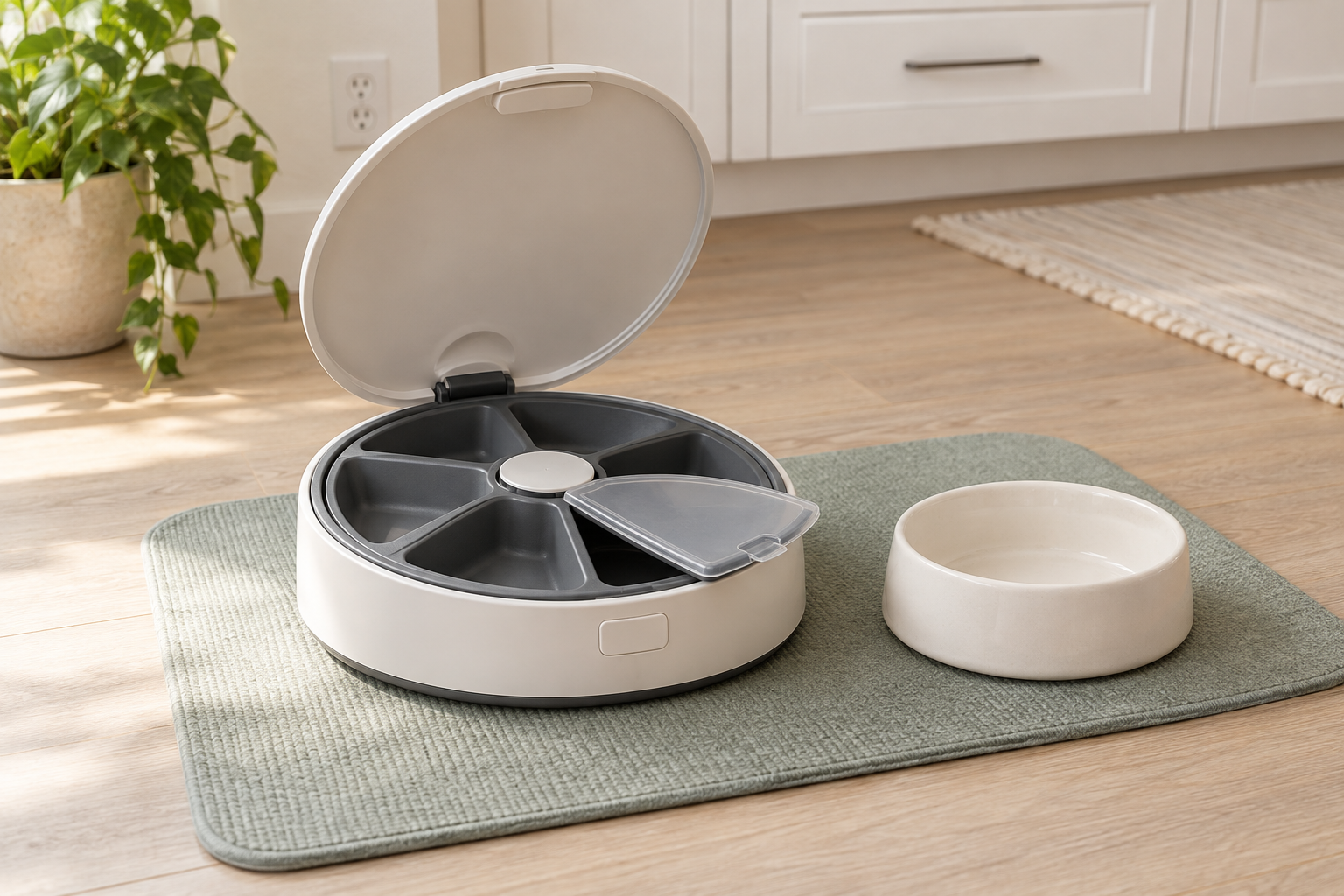
Quick Verdict: Buy, Delay, Choose an Alternative, or Skip
Buy when a specific recurring meal needs to open while you are briefly unavailable, the exact feeder supports that food and timing according to its current directions, your pet can access it comfortably, and a person will still check the pet and reset the tray.
Delay when the feeding plan is still changing, you have not tested the timer and opening sequence while present, or the listing is vague about cooling, power-loss behavior, food contact parts, or cleaning.
Choose an alternative when a household member, sitter, or scheduled visit can serve the meal and observe the pet. A manual bowl is simpler, easier to inspect, and often more useful when timing varies.
Ask a veterinarian before buying when meal timing or amount is connected to medication, diabetes, illness, recovery, weight change, appetite change, vomiting, difficulty eating, or another medical concern. A product page cannot set a safe feeding plan.
Skip when the feeder would be left without a backup person, your pet forces or tips devices, another pet can steal the meal, reliable power is unavailable, or the maker's food-handling instructions do not match the planned interval.
The Criteria That Make One Worth It
- A defined timing gap: Name the exact meal and how often automation would be used. Occasional convenience may not justify storage and maintenance.
- Documented food fit: Follow the feeder maker's directions and the food label for preparation, temperature, and discarding. Do not infer a safe window from an ice pack or marketing photo.
- Usable compartments: Measure the meal volume, compartment opening, tray depth, and the pet's access without changing a veterinarian-approved amount.
- Predictable controls: The timer sequence, clock, lock, lid position, and manual release should be understandable and testable while you are home.
- Real supervision: Someone still needs to confirm that the feeder opened, the food remained appropriate, the pet ate normally, and water is available.
- Fallback ready: Keep a manual bowl and a person-based plan for a dead battery, outage, jam, missed opening, spilled food, or changed schedule.
Cost, Setup, and Maintenance Tradeoffs
Compare more than the purchase price. Add replacement batteries, cooling inserts or accessories, compatible replacement trays, and the time needed to portion, load, chill if directed, clean, dry, reassemble, and test the feeder. A device that is awkward to reset may not earn its cabinet space.
Battery-only models avoid a floor cord but require a replacement schedule and low-power checks. Plug-in cooling may add cable routing and outage questions. Hybrid power can be useful only when the manual clearly explains which functions continue on backup. Test the exact unit before depending on it, but do not treat a successful test as a guarantee.
Check whether food-contact pieces detach, how seams and lid tracks are cleaned, and whether every washed part can dry fully before reassembly. Follow the maker's care directions; do not submerge powered components or improvise cleaners.
Red Flags: Stop, Delay, or Escalate
Stop using a feeder with a cracked tray, damaged cord, swollen or leaking battery, loose part, sharp edge, persistent residue, unreliable lid, changed motor sound, or repeated timing error. Discard food and reset the plan according to its label and professional guidance when the condition or timing is uncertain.
Pause automation and contact a veterinarian if a pet suddenly eats less or more, cannot access the tray comfortably, loses weight, vomits, seems unwell, or needs medically timed meals. Ask a qualified professional about multi-pet conflict or guarding rather than expecting a different lid to solve it.
Who Should Skip an Automatic Wet-Food Feeder?
Skip one if the pet needs close observation at meals, the schedule changes daily, wet food would sit outside documented limits, cleaning the mechanism will be difficult, or another animal can reach the open compartment. It is also a poor substitute for a sitter or check-in during longer absences.
Owners who already have a reliable manual routine may gain little from the category. If the real problem is portion guidance, appetite, medication timing, travel care, or access between pets, solve that issue with the appropriate veterinarian or care professional before buying equipment.
Try the Simpler Plan First
Use a washable bowl and a household schedule when someone can serve and remove the meal. Arrange a trusted sitter or check-in when absence—not clock precision—is the real issue. If multiple pets share a feeding area, observe access and ask for professional help when conflict or health needs complicate the setup.
For the broader feeding setup, use the new-pet essentials pillar. If the category passes this test, compare covered-tray, passive-cooling, and powered-cooling feeder formats. For dry food only, see the separate scheduled dry-food feeder guide.
Bottom Line
An automatic wet-food feeder is worth it only when it solves a specific short timing gap, its documented food and power limits fit an established feeding plan, your pet can use it comfortably, cleaning is realistic, and a person remains responsible for checking both pet and device. Delay for instructions or veterinary input when those points are uncertain; choose a manual bowl and person-based plan when it is simpler and more dependable.