Quick Answer
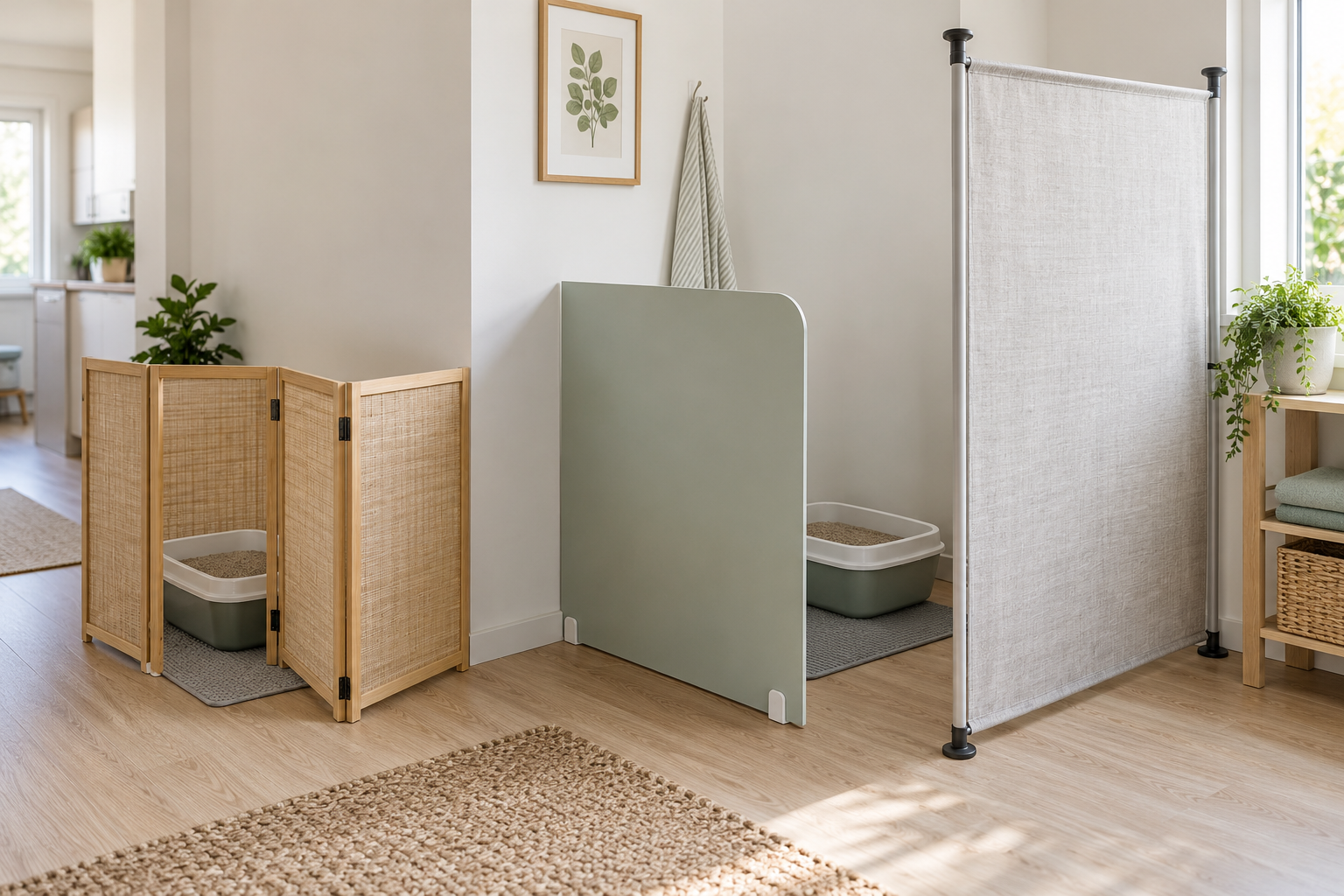
Choose folding panels for an awkward corner, a rigid panel for a predictable wipe-clean barrier, or washable fabric when laundering and drying are practical. A screen is furniture—not odor control, tracking prevention, or a way to make a cat accept a box. If a cat suddenly avoids the box, strains, vocalizes, or changes elimination habits, contact a veterinarian promptly.
Measure the Complete Layout
Measure the box, rim, mat, lid-removal space, and normal approach. Tape the proposed footprint on the floor, including feet and angled panels. Preserve a broad, direct route with room to enter, turn, and leave. Do not create a tunnel, dead end, dark enclosure, blocked doorway, or poorly ventilated corner.
Compare the Formats
Folding panels
Compare hinge movement, gaps, feet, weight, edges, and intended standing shape. More panels add coverage but also joints, floor contact, and cleaning work.
Rigid panels
A single panel has a predictable shape but fixed footprint. Check both sides, base depth, edge finish, and whether feet create a trip point or slide beneath the box.
Washable fabric
Check whether fabric removes easily, exact wash and dry directions, seams, attachments, and frame stability. Skip loose fabric, dangling ties, or a frame the cat can pull or climb.
Selection Criteria
- Footprint: Measure the assembled shape, feet, and connectors.
- Access: Preserve an open route rather than a narrow passage.
- Stability: Follow setup directions; do not improvise weights or mounts.
- Material: Inspect coatings, fabric, hinges, fasteners, and edges.
- Cleaning: Match wiping, washing, and drying to the routine.
- Storage: Verify folded size and a secure, dry position.
Cleaning and Routine Checks
Move the screen after the cat leaves. Remove dust and litter, clean only as directed, and dry panels, fabric, feet, hinges, and seams fully. Check for wobble, torn fabric, loose threads, cracks, sharp edges, loose hardware, or chew damage. Stop using a damaged screen. Continue normal scooping and box cleaning.
Who Should Skip One?
Skip one when it narrows the route, blocks a walkway or ventilation, or cannot stand securely. Rearranging furniture may soften the sight line without another product. Never use a screen as the response to sudden avoidance, house-soiling, pain, or distress; seek veterinary guidance.
Related Guides
Compare covered and open boxes, litter mats, and usable box sizes.
Bottom Line
The best screen fits the room while keeping the box open, stable, ventilated, and easy to approach. Choose by layout and upkeep—not promises about odor, tracking, or behavior.