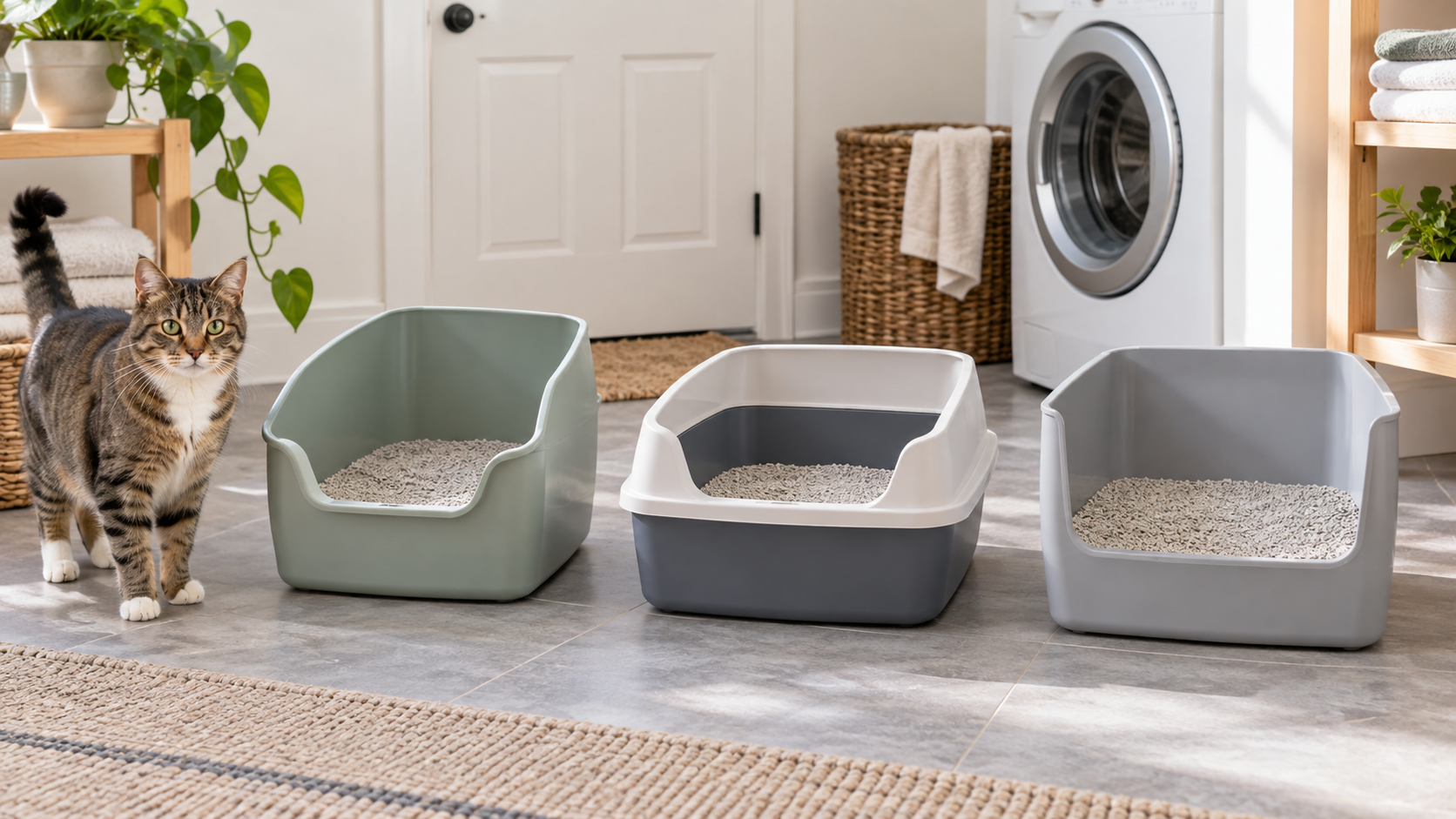
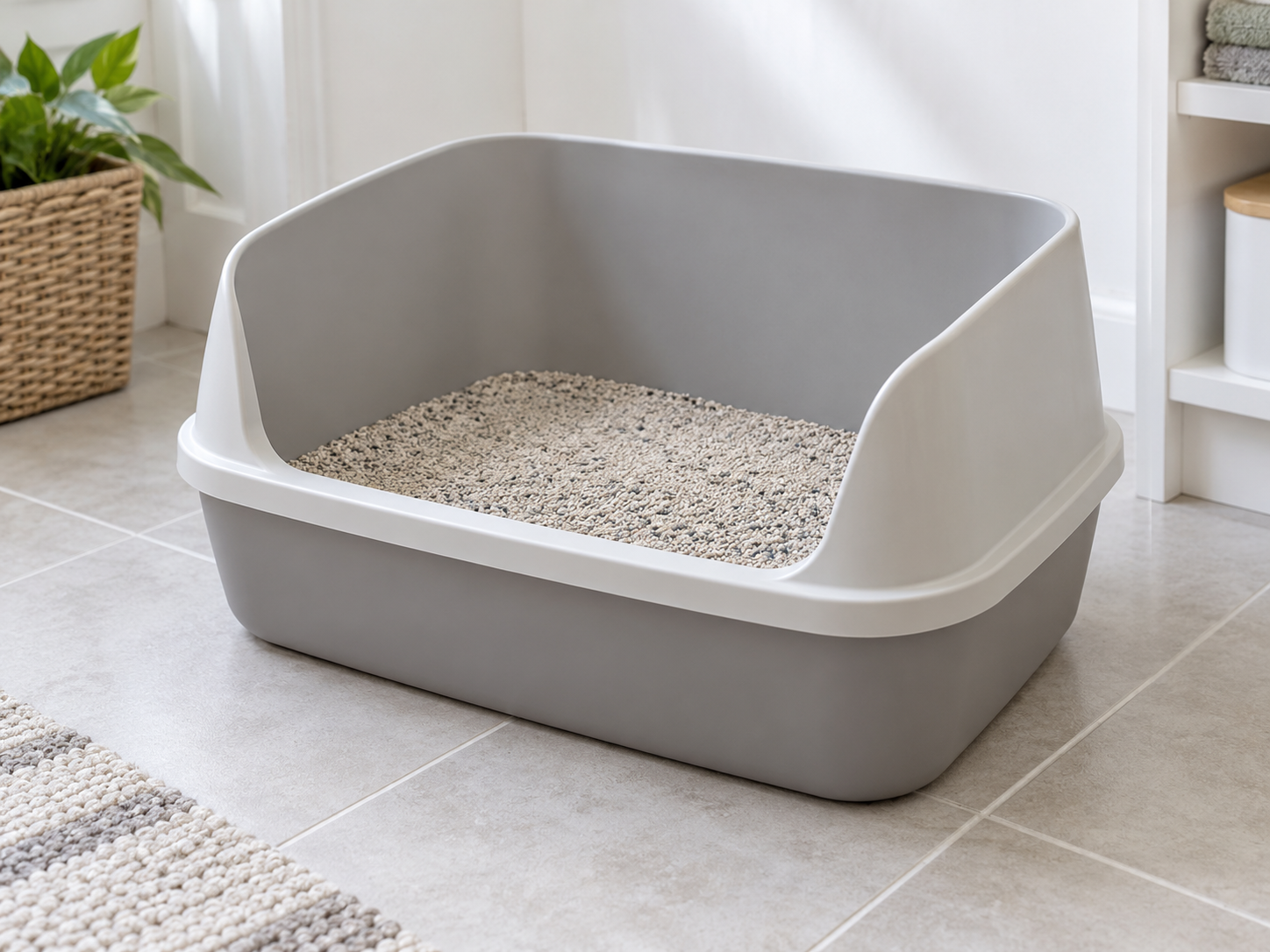
 One-piece high-sided pan
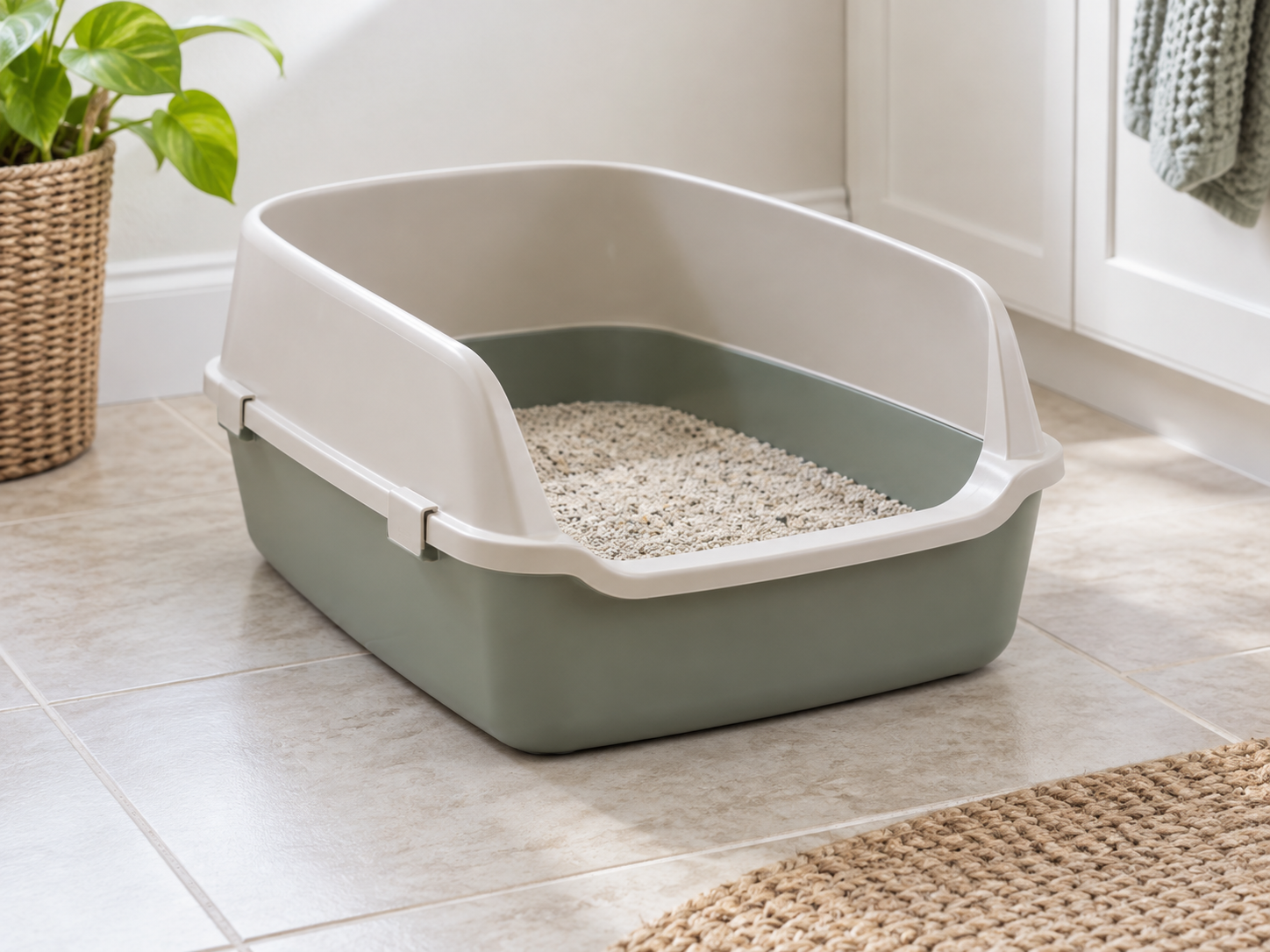 Removable-rim box
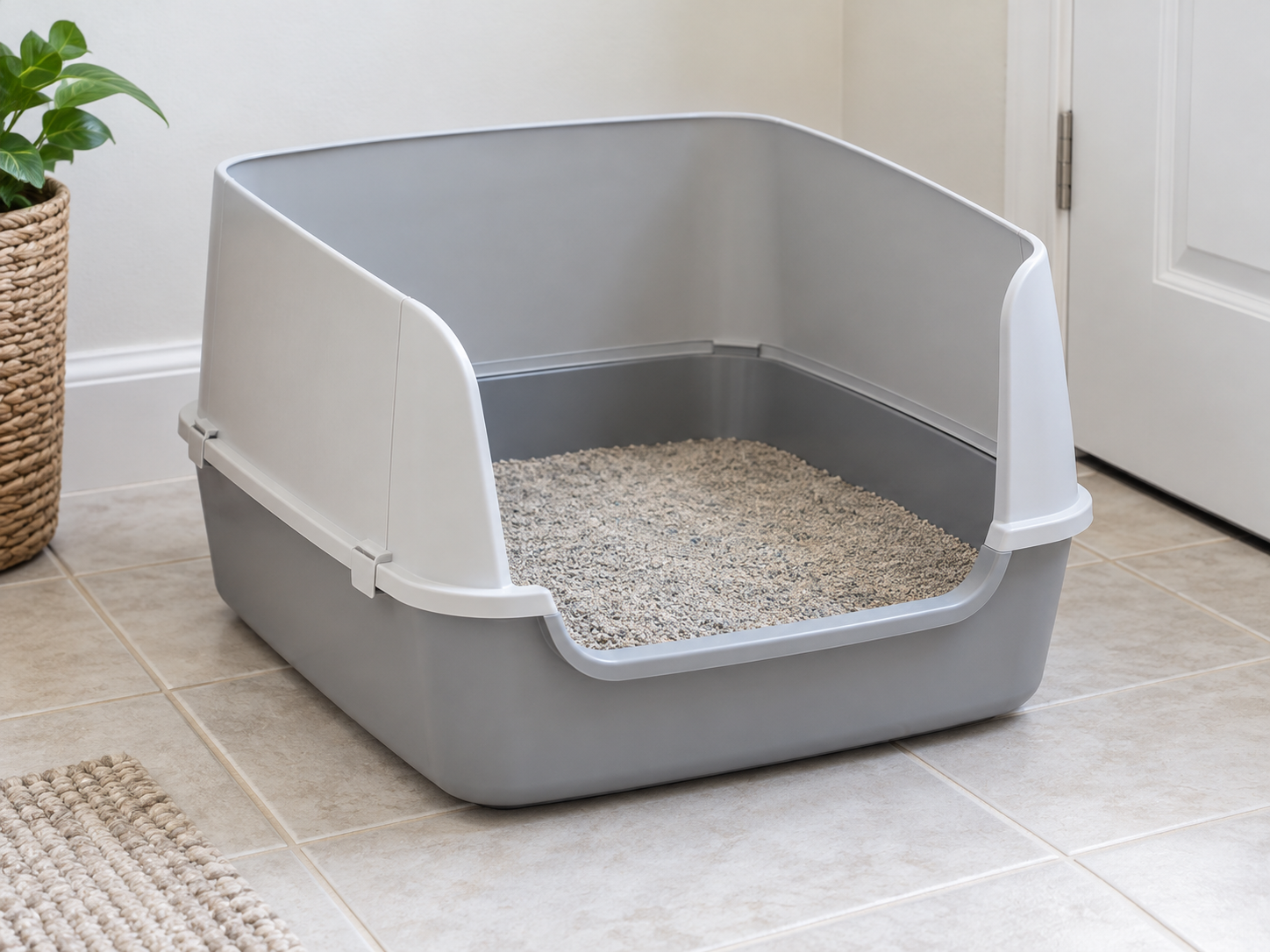 Three-sided shield setup
This is a category buying framework, not a hands-on product test. A higher wall may reduce some side and back scatter, but no open box can promise a litter-free floor. Litter texture, fill depth, the cat's digging pattern, entry design, box size, and nearby mat all affect the result.
Quick comparison
- One-piece high-sided pan: simplest construction and usually the fewest seams, but the molded entry and wall shape are fixed.
- Removable-rim box: the upper rim can come off for cleaning, while its clips and join create extra areas to inspect.
- Three-sided shield: can add height around a compatible open pan, but fit, gaps, attachment, and assembled stability matter.
- High-back pan: concentrates height where litter is often kicked backward while keeping the sides and entry more open.
Measure access and usable room
Record the inside floor length and width at the litter surface. Sloped walls, thick rims, and rounded corners can make the usable area meaningfully smaller than the outside dimensions suggest. The cat should have room to enter and turn without being forced against a wall or seam.
Measure the front entry from the floor and compare it with the side and back heights. A very low entrance can be easier to step through but may let more litter leave at the front; a tall entrance may not suit a cat with mobility limitations. If access has recently become difficult, ask a veterinarian rather than treating a different box as the whole answer.
Selection criteria that matter
- Interior dimensions: prioritize the flat usable floor and turning room over a large outside measurement.
- Wall pattern: note whether the back, sides, or all three are tall and whether the height changes near the entry.
- Entry geometry: compare threshold height, opening width, rounded edges, and whether litter can collect along the front lip.
- Seams and clips: removable rims and shields need joins that can be separated, inspected, and cleaned as directed.
- Scoop access: confirm that the walls do not prevent a normal scoop from reaching the bottom corners.
- Material and finish: look for an intact, smooth surface and follow the maker's cleaning instructions; replace a box that is cracked or cannot be cleaned adequately.
- Room footprint: leave space to approach the entry, scoop, remove a rim, and lift or tip the empty box during cleaning.
- Return terms: dimensions that look workable online can feel cramped in the actual litter area, so read the current return conditions before use.
Tradeoffs by format
One-piece walls trade flexibility for simpler construction. With no detachable upper rim, there are fewer attachment points to manage. The downside is that the whole box must fit the sink, tub, or cleaning space, and the fixed entry cannot be changed.
A removable rim trades a seam for easier access to the lower pan. Removing it can simplify washing and scooping, but litter and residue can settle along the join. Check that the rim seats fully after every cleaning and stop using damaged clips.
A separate shield trades an all-in-one design for compatibility questions. It may preserve an existing pan, but it should not wobble, leave hard-to-clean gaps, narrow the entry unexpectedly, or rely on an improvised attachment. Use only the configurations the maker describes.
Who should skip a high-sided box for now?
Skip the purchase when the only box that fits the room leaves too little usable interior space, the entry is too high for the individual cat, a shield is not documented as compatible with the pan, or the walls prevent thorough scooping and washing. A roomy ordinary open pan plus a well-placed litter mat may be a better fit when most mess leaves through the front rather than over the sides.
Do not use a high-sided box to work around straining, pain, repeated misses, sudden litter-box avoidance, or a new change in elimination habits. Those changes warrant prompt veterinary guidance. In a multi-cat home, box count and placement are broader setup decisions; one taller box is not a universal fix.
Setup, cleaning, and observation
Put the box on a level, washable surface with a clear approach to its entry. Follow the litter maker's and box maker's directions rather than filling above a marked line or so deeply that litter immediately spills through the opening. Keep a mat outside the entry without creating an unstable or snagging surface.
Scoop on the normal routine and inspect corners, the front lip, rim seams, clips, and shield joins. During a full clean, disassemble only as directed and let every part dry before reassembly. Watch whether the cat enters and turns normally; if the cat avoids the box, perches at the edge, or seems uncomfortable, restore a familiar accessible option and consult a veterinarian about sudden changes.
Related litter-area guides
Use the covered versus open comparison when privacy and enclosure are still undecided. For body fit, compare extra-large litter box formats. For cleanup outside the box, see litter mats for tracking control and litter scoop varieties.
Bottom line
A one-piece high-sided pan is the simplest starting point when its entry and interior fit the cat. A removable rim can make the lower pan easier to access, while a compatible three-sided shield can add wall coverage to a suitable open setup. Choose by usable room, entry access, cleanable construction, and everyday scoop reach—not by wall height alone.