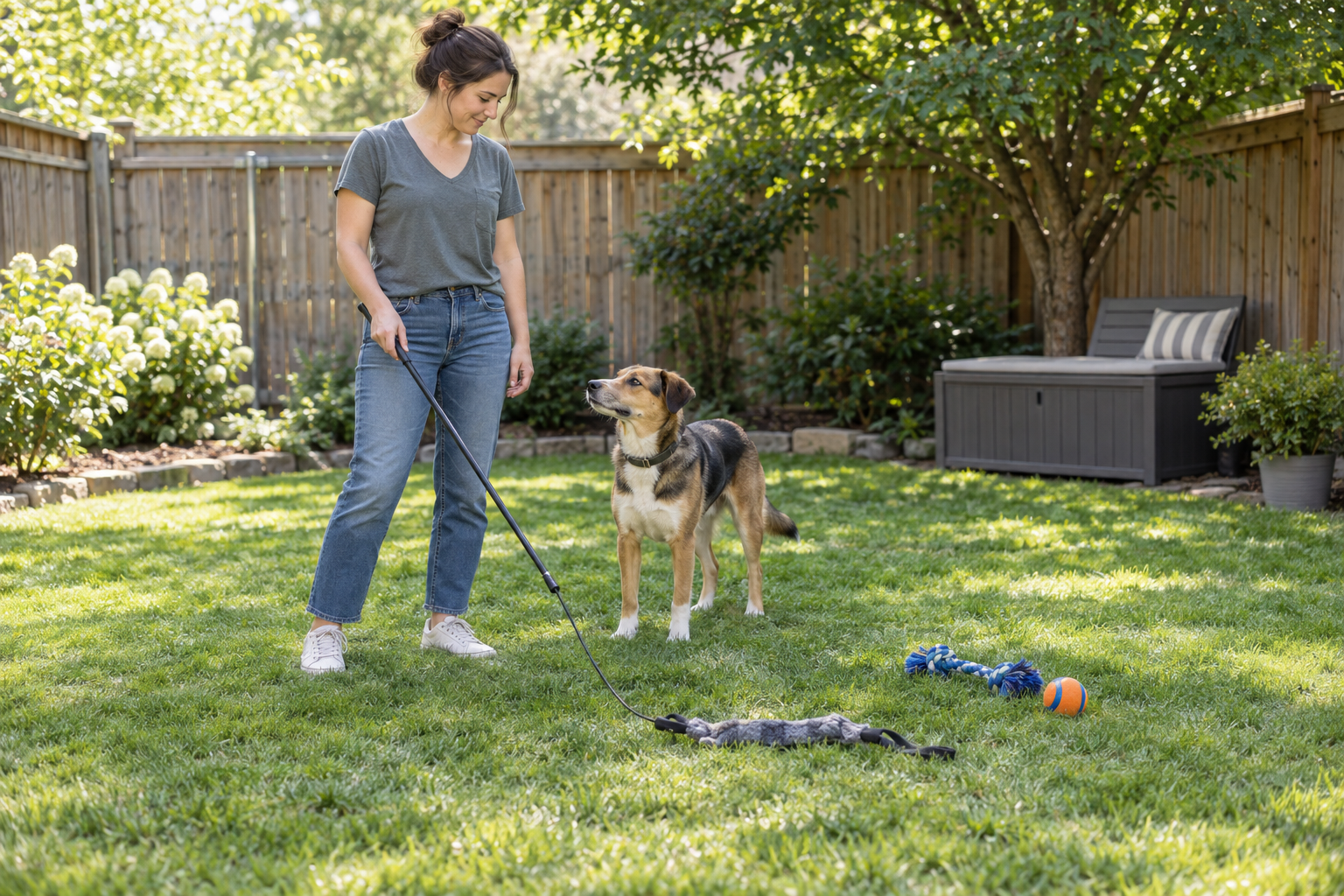
Quick Verdict: Buy, Delay, Choose an Alternative, or Skip
Buy when the dog already enjoys appropriate interactive chase play, the handler can comfortably control the measured setup, every session can be supervised, and there is enough unobstructed space for the pole, cord, lure, handler, and dog.
Delay when you have not measured the clear area, do not know the assembled and stored dimensions, cannot confirm current manufacturer guidance for the dog, or have not planned where the damp or dirty lure will be cleaned and dried.
Choose an alternative when a standard ball, two-handled tug toy, food-free sniffing game, or another familiar supervised toy offers easier handling and storage. The simpler option is often the better purchase when it already gets used.
Ask a professional before buying when the dog has pain, limping, mobility limits, a recent injury, medical restrictions, or becomes difficult to disengage from moving objects. A veterinarian can address physical suitability; a qualified reward-based trainer can help assess behavior and handling.
Skip when the only available surface is cramped, slippery, shared, or crowded with hard edges and obstacles; when close supervision is unrealistic; or when the dog grabs cords, destroys lures, or becomes distressed during fast-moving play.
The Criteria That Make a Flirt Pole Worth It
- Usable clear space: Add the assembled pole and cord reach, then allow room for the handler and the dog’s path. A “backyard” label is not a measurement.
- Handler control: The grip, balance, weight, and total reach should feel manageable without wrapping the cord around a hand or improvising a second grip.
- Dog fit: Follow current manufacturer size and use guidance. Watch the dog’s posture and willingness; a product label cannot establish physical or behavioral suitability.
- Predictable supervision: This is an interactive tool, not a leave-out chew, tether, or unattended toy.
- Inspection access: You need to see and feel the pole, joints, cord, knots, connectors, and lure before each use.
- Secure storage: The full tool and loose cord need a protected place the dog cannot reach after play.
Cost, Setup, and Maintenance Tradeoffs
The purchase price is only the first cost. Check whether the exact design has compatible replacement lures or cord assemblies, and compare those routes before relying on a replaceable-parts claim. A cheaper pole with unclear parts support may become a complete replacement when only the lure wears out.
Setup time matters too. A rigid pole is quick to pick up but needs long storage. A collapsible design stores in less space but adds joints that must lock and be inspected. A flexible pole changes how movement feels at the handle and still needs full-length damage checks. If assembly or inspection makes the tool unlikely to leave the closet, it is not worth buying.
Follow the maker’s cleaning directions for every material. Remove debris, clean the lure and cord as directed, let every component dry fully, and store the cord without tight tangles. Retire damaged parts or the complete tool when a compatible repair is not clearly supported.
Red Flags: Stop, Delay, or Escalate
Do not use a pole with a cracked or splintered shaft, loose joint, frayed cord, exposed sharp connector, torn lure, unreliable lock, or movement that has changed. Stop the session if the setup tangles, the handler loses control, the dog appears distressed, or the play cannot stay inside the clear area.
Do not use product advice as medical clearance. Contact a veterinarian for pain, limping, stiffness, injury, mobility concerns, or uncertainty about rapid turns and stops. If chase play produces extreme arousal, guarding, redirected biting, or difficulty disengaging, pause the activity and consult a qualified reward-based trainer rather than expecting a different product to solve it.
Who Should Skip a Flirt Pole?
Skip one if you live without a suitable clear area, cannot store a long pole and loose cord securely, dislike frequent equipment checks, or need an activity another person could leave out unattended. Renters and small-home owners should be especially honest about where the assembled tool can be used—not just where it can be stored.
Also skip when the dog repeatedly targets the cord or pole instead of the lure, chews and swallows toy material, cannot comfortably stop, or has uncertain physical suitability. Owners with shoulder, wrist, balance, or grip limitations may prefer a toy that demands less reach and continuous control.
Try a Simpler Alternative First
Use a familiar ball when you have a safe, suitable fetch routine and want less equipment. Choose a two-handled tug toy when close interactive play is easier to control and both hands can stay away from the dog’s mouth. Try supervised scent-based activities when fast chase movement is not a good fit. Rotate an existing toy before buying another category; actual repeat use matters more than novelty.
For the wider decision framework, use the supervised enrichment pillar. If the category passes this worth-it test, the dog flirt-pole format guide compares rigid, flexible, and collapsible options by measured reach, inspection, parts, cleaning, and storage.
Bottom Line
A dog flirt pole is worth it only when its full working envelope fits a clear space, the handler can control it comfortably, the dog is an appropriate and willing participant, and inspection, cleaning, replacement parts, and secure storage fit the routine. Delay for measurements or professional input when those points are uncertain. Choose a simpler toy—or skip the purchase—when it solves the same play need with less setup and risk.