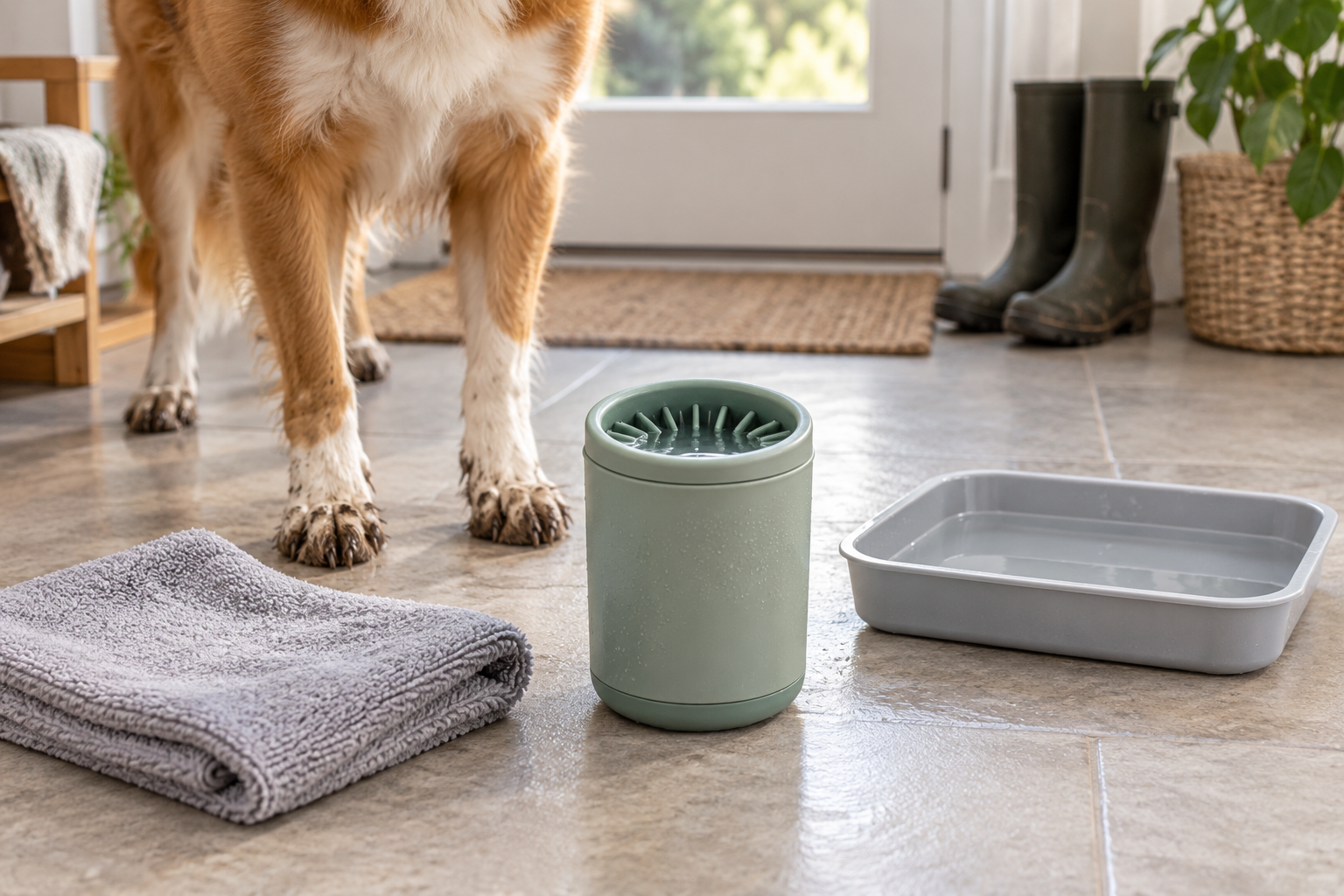
This guide covers ordinary mud and surface dirt on intact paws after routine walks. A cup cannot diagnose or treat redness, cuts, swelling, embedded material, limping, persistent licking, unusual odor, or pain. Pause home cleaning and contact a licensed veterinarian when those signs are present.
When Is a Paw Cleaner Cup Worth It?
The strongest case is a repeatable wet-weather routine: several walks a week leave more mud than a dry towel can lift, the cleanup happens near a sink or drain, and the dog calmly allows each paw to be handled. A cup can keep a small rinse volume around the paw and reduce the need to carry the dog through the home to a tub.
The purchase is less convincing when the real problem is a few damp prints, loose grit, or entryway organization. In those cases, an absorbent towel and a washable mat may solve the routine with fewer parts. A cup also adds its own work: filling, holding, emptying, disassembling where applicable, washing, and complete drying.
Before shopping, repeat the current routine for one week. Note how often water is genuinely needed, how long cleanup takes, which paws are dirtiest, whether your dog accepts handling, and where wet tools dry. Buy only if the cup removes a recurring point of friction rather than adding another object to clean.
Opening Width, Depth, and Dog Tolerance Matter
Use the maker's current sizing method and measure the paw as directed rather than guessing from breed or body weight. The opening needs enough clearance for the paw to enter and leave without crowding toes, while the internal depth should not wet more of the leg than the routine requires. Confirm whether the stated measurement refers to the outer cup or the usable opening.
A removable flexible insert can make the interior easier to inspect and wash, but softness, material, and removal method vary. Do not assume every insert is equally flexible or every cup is suitable for every dog. Inspect edges and contact surfaces before each use, and stop using a cracked, torn, rough, or permanently deformed part.
Introduce the empty cup where your dog can inspect it, then follow the current maker directions without forcing a paw inside. Keep the paw supported in a natural position. If the dog repeatedly withdraws, freezes, pants, vocalizes, or struggles, stop. A towel or open rinse keeps the paw visible and may be easier to accept. For persistent handling fear, seek guidance from a qualified force-free trainer; for pain or sudden sensitivity, contact a veterinarian.
Count the Whole Wash-and-Dry Routine
A paw cleaner is useful only when its upkeep fits the household. Keep clean rinse water and an absorbent towel ready before starting. Follow the product's current fill and motion instructions, work on one paw at a time, and dry the paw afterward instead of leaving it damp.
Empty dirty water promptly. Separate removable pieces only as the maker directs, wash all contact surfaces with the permitted method, rinse away residue, and let the cup and insert dry completely before reassembly or storage. A narrow deep cup may need more counter or drying-rack space than expected. Skip any model whose interior cannot be easily inspected and reached during cleaning.
Do not add household disinfectants, essential oils, medications, or other products unless a veterinarian specifically directs their use for your dog and the product maker confirms compatibility. The cup's job is mechanical cleanup of ordinary dirt; it is not a sanitizing or health device.
A Towel or Shallow Rinse May Be Easier
For light dampness and loose surface dirt, a folded washable towel is usually the simplest first choice. It is easy to position, keeps the paw visible, and goes directly to laundry. Use a clean section for each area as needed, and launder and dry it according to its care label.
A stable shallow container can help when plain water is useful but a deeper cup feels too enclosed. Measure the container and choose a location where it will not slide or spill. Never force a dog to stand in it. A tub or sink may be more practical for widespread mud, but surface grip, lifting, and the dog's comfort still matter.
If towels are constantly wet at the doorway, the broader doorway cleanup station guide can help with placement and laundry flow. For lighter disposable cleanup, compare pet wipes for muddy paws, using only products labeled for pets and stopping if irritation occurs.
Who Should Skip a Dog Paw Cleaner Cup?
- Your dog resists having a paw placed into an enclosed container or becomes distressed during the motion.
- The normal mess is light enough for one towel, or muddy walks are too infrequent to justify another tool.
- You cannot verify a suitable usable opening, internal depth, material, or current cleaning directions.
- The cup cannot be washed, inspected, and fully dried conveniently after each use.
- Your dog has redness, wounds, swelling, pain, limping, persistent licking, embedded debris, or another concern that needs veterinary guidance.
- You expect the cup to disinfect paws, prevent illness, replace grooming, or solve a medical or behavior problem.
Bottom Line
A dog paw cleaner cup is worth it for recurring wet mud when the measured fit is right, the dog willingly accepts the handling, and washing and drying the tool is easier than the current routine. Try a towel or shallow rinse first, count the full cleanup effort, and skip the cup when it creates more resistance or maintenance than it removes.