Quick Answer
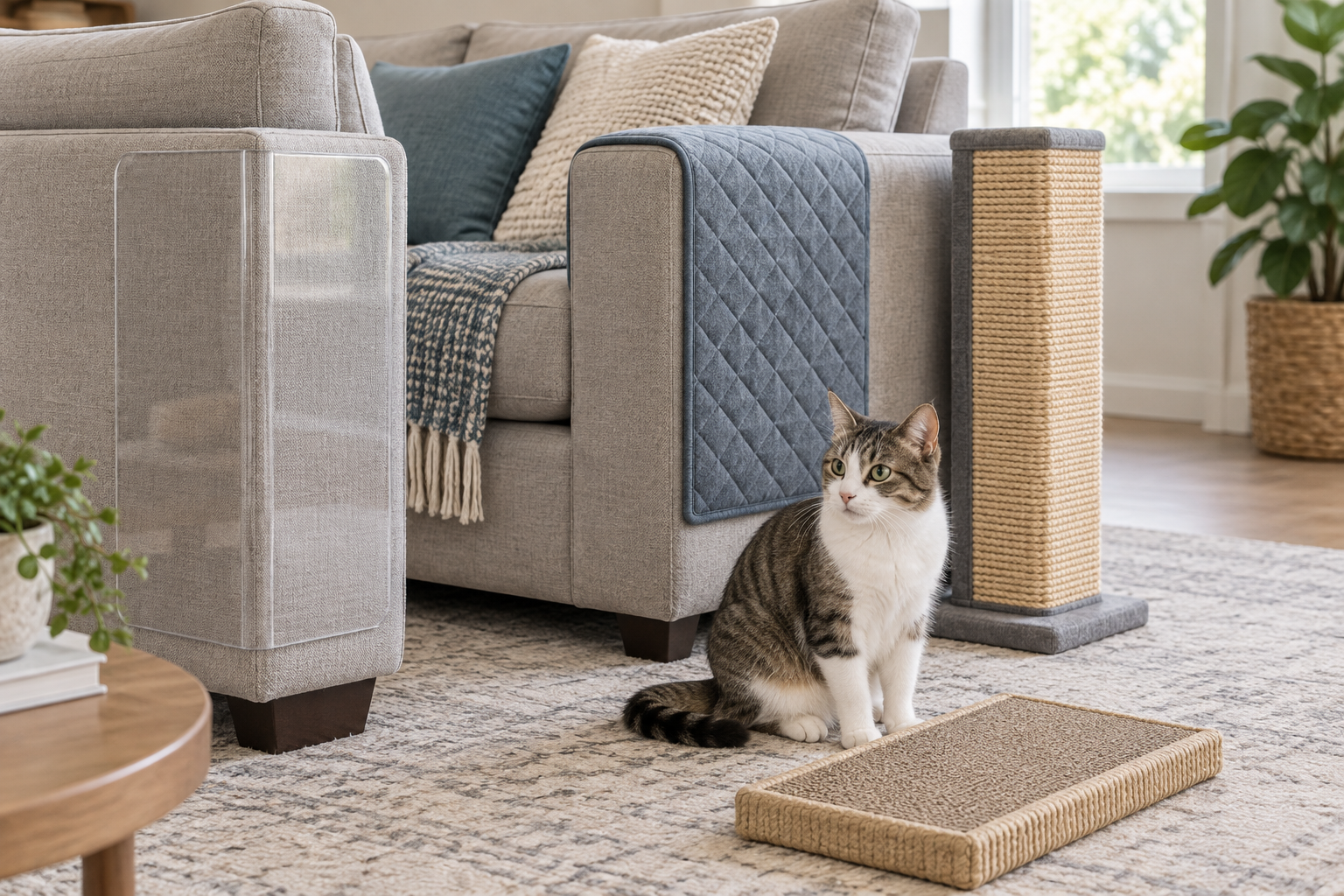
Choose a clear panel only when its maker supports the upholstery and attachment method. Choose a fabric arm cover when removable coverage can stay aligned and be washed and dried as directed. Choose a freestanding guard when you want no sofa attachment and have stable floor space. Skip all three if the guard would create loose edges, exposed fasteners, residue risk, an unstable object, or a blocked walkway.
A furniture guard is a property-protection accessory, not a behavior treatment or guarantee. Sudden or severe scratching changes, distress, aggression, skin changes, pain signs, or other concerning behavior call for a veterinarian or qualified feline behavior professional.
Measure the Contact Zone and Check the Upholstery
Watch where contact actually occurs without encouraging it: outer arm, front edge, corner, lower side panel, or another spot. Measure the height and width of that zone, then include seams, piping, recliner gaps, removable cushions, controls, and clearance needed for ordinary sofa use.
Identify the upholstery from the sofa maker's label or documentation. Do not assume an adhesive, pin, hook-and-loop strip, elastic, or friction fit is appropriate for leather, faux leather, velvet, loose weave, delicate fabric, treated material, or a slipcover. Follow both makers' directions. When compatibility is vague, choose a non-attached format or skip the guard.
Clear Panel, Fabric Cover, or Freestanding Guard?
- Clear panel: visually quiet and easy to wipe when the material permits, but exact panel size, edge finish, attachment, removal, residue, and puncture risk need scrutiny.
- Fabric cover: can cover an irregular arm and enter the laundry, but may shift, bunch, retain debris, hide moisture, or expose straps and seams.
- Freestanding guard: avoids attaching to upholstery and may double as a scratchable surface, but consumes floor space and must remain stable without trapping paws or obstructing a path.
No format is universally safer or more durable. Assess the complete current product, its documented use, the sofa, the room, and the cat's access. Inspect edges, seams, fasteners, bases, and attachment points routinely; remove the guard if it curls, shifts, tears, loosens, or exposes parts.
Cleaning and Removal Matter Before Purchase
Check how debris is removed from both sides and whether the guard must come off for cleaning. For a fabric cover, note wash method, drying space, and whether internal padding or grip material has separate care. For a clear panel, check permitted cleaners and how residue or trapped grit is handled. For a freestanding surface, check vacuum access, spot cleaning, drying, and replacement guidance.
Test any maker-approved attachment in an inconspicuous place only if both product and furniture instructions permit it. Do not improvise with stronger adhesive, extra pins, staples, or hardware. Renters should also consider lease terms and responsibility for upholstery or floor damage.
Pair the Guard With an Appropriate Scratch Outlet
Place an appropriate, stable scratching surface near the protected area based on the direction and material the cat already uses. A cat that stretches upward may prefer a tall stable post; a cat that scratches low may prefer a broad horizontal pad. Do not force the cat onto either surface or punish scratching.
Use the small-apartment scratching-post guide for vertical options, the horizontal scratch-pad guide for floor-level preferences, or compare sisal and cardboard scratcher materials.
Who Should Skip a Sofa Scratch Guard?
Skip a dedicated guard when a washable throw or an existing fitted slipcover already protects the exact zone without loose edges. Skip adhesive or pin-mounted products when upholstery compatibility is unknown, the sofa maker prohibits them, or cosmetic damage would be unacceptable. Skip freestanding guards when the base enters a walkway, rocks on the floor, or cannot stay clear of children, other pets, cords, vents, and furniture mechanisms.
Also pause the purchase when scratching changes suddenly or appears alongside hiding, altered appetite, litter-box changes, overgrooming, limping, skin irritation, or distress. Product shopping should not delay professional assessment.
Bottom Line
Start with the measured sofa panel and verified upholstery compatibility. Choose clear coverage for a supported low-visibility attachment, washable fabric for a stable removable layer, or a freestanding guard when avoiding sofa attachment matters. Keep an appropriate scratching outlet nearby, inspect the setup, and skip any format whose fit or removal instructions are uncertain.