This is a buying framework for an established routine on a coat that can be handled comfortably. It does not teach dematting, diagnose skin or coat changes, promise pain-free grooming, or replace a veterinarian or qualified groomer.
Quick Comparison
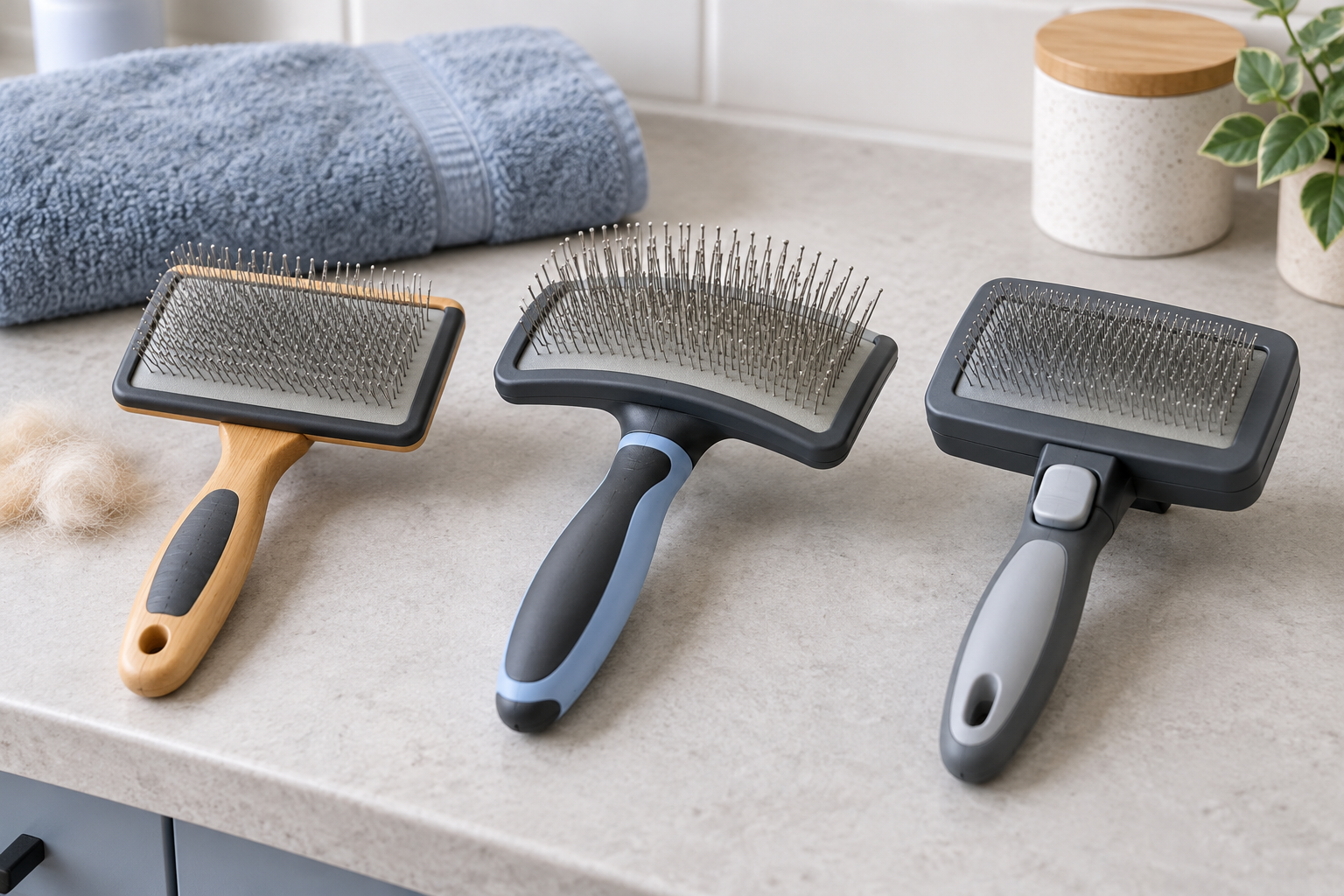
Start with a soft-pin rectangular slicker when the current maker guidance fits the coat and you want a modest working area with light, controllable contact. Compare a long-pin curved head when the maker specifically identifies the dog's coat type and the added pin reach and head contour remain easy to control. Choose a self-cleaning mechanism only after the basic pin field fits; the release button is a cleanup feature, not proof of gentleness or coat compatibility.
Skip the category when the coat is tightly matted, brushing causes pulling or distress, the listing gives no useful coat or pin information, or an existing appropriate brush already handles the routine.
Selection Criteria That Matter
- Current coat guidance: look for a maker-stated use that matches long-coated dogs and the individual coat texture. “For pets” is too broad to settle the choice.
- Pin construction: compare listed pin length, spacing, flexibility, tips, and cushion movement. Inspect the delivered brush for bent pins, rough edges, looseness, or damage.
- Head geometry: a broad or curved head covers and contacts the coat differently. Choose a width and contour you can guide without forcing the brush around legs or body curves.
- Handle control: compare handle length, grip shape, texture, and balance. You should not need a tight grip or awkward wrist position to keep the head controlled.
- Hair release: a retracting or push-button head can simplify cleanup, but it adds moving parts and seams. Check how completely the pins retract and how the mechanism is cleaned.
- Care and storage: follow the current maker directions for hair removal and cleaning, dry the brush fully, protect the pins, and store it beyond pet access.
- Return terms: verify them before use because a listing photo cannot establish pin feel, hand fit, or suitability for an individual coat.
Pin Reach, Working Width, and Cleanup Tradeoffs
Longer pins may reach farther into a coat, but reach is useful only when the documented coat fit is right and the head moves without dragging. A curved head may follow some body contours while feeling less predictable around smaller areas. A compact rectangular head can offer more deliberate placement but takes more passes. None of these shapes makes pressure unimportant.
Self-cleaning heads can shorten hair removal between passes. The tradeoff is a mechanism that must move freely and stay clear of trapped hair. Treat button action as secondary to the pins, cushion, handle, and coat guidance. Replace or stop using a brush when pins bend or loosen, the cushion cracks, an edge roughens, or the release mechanism sticks.
Keep Routine Brushing Separate from Dematting
A slicker brush can be part of routine coat maintenance, but it is not permission to pull through resistance. Do not use this guide as a mat-removal technique. If the coat cannot be separated gently, a qualified groomer can assess the practical next step. Contact a veterinarian when there is pain, inflamed or broken skin, sores, swelling, persistent itching, bald areas, an unusual odor, or a sudden coat change.
Watch the dog rather than the brush marketing. Pause when the dog repeatedly moves away, stiffens, turns toward the tool, vocalizes, guards an area, snaps, or otherwise shows that handling is no longer manageable. Seek qualified help instead of buying a more aggressive tool.
Who Should Skip a Slicker Brush?
Skip one when the dog's coat care has not been established, the coat is tightly tangled or matted, handling is fearful or unsafe, or a medical concern could explain discomfort or coat change. Also skip a new purchase when a suitable tool already works and can be cleaned and stored properly.
Owners comparing a tool for loose undercoat rather than routine slicker contact should use the deshedding-brush guide. For a dog that is new to broad hand contact, compare the narrower tradeoffs in the grooming-glove guide. Store whichever tool fits in a dry, secure place using the grooming organizer guide.
Bottom Line
Choose among a soft-pin rectangular, long-pin curved-head, or self-cleaning slicker only after confirming current coat guidance, pin construction, working dimensions, grip, cleaning, and return terms. Favor control and a calm response over maximum pin length or broad “best” claims. Tight mats, pain, skin changes, or unsafe handling belong with a qualified groomer or veterinarian—not a stronger brush.