Quick Answer
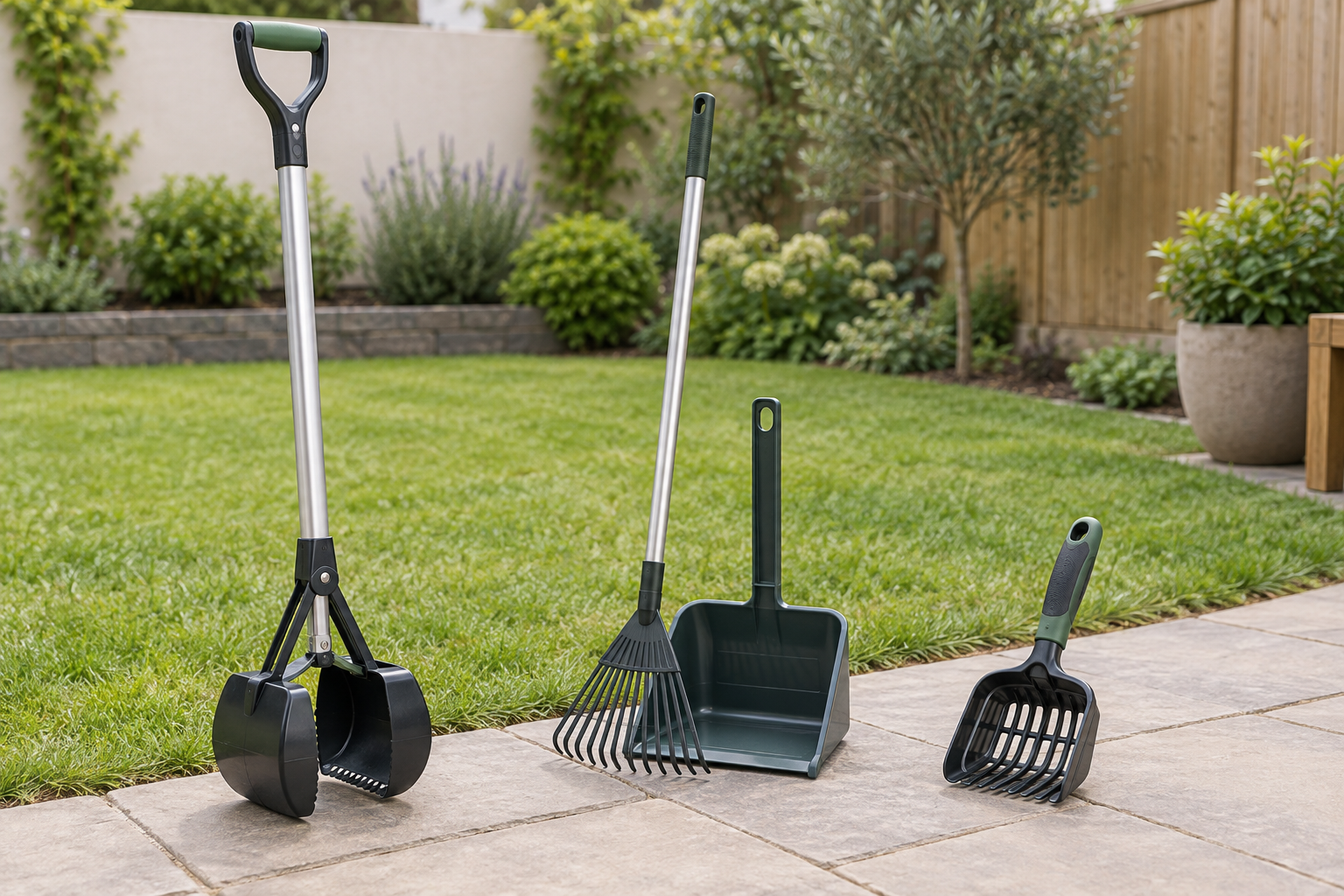
Choose a jaw-style long-handle scoop when you want a single compact tool, can comfortably operate its grip, and the maker identifies the head for your lawn, gravel, mulch, or hard surface.
Choose a rake-and-tray set when several spots are collected in one pass, the rake profile matches the surface, and two-piece cleaning and storage will not become a nuisance.
Choose a short-handled claw scoop when bending or kneeling is comfortable, direct control matters, and a long tool would be awkward to store. It is not a standing-height substitute.
If you have not decided whether a reusable tool fits your routine at all, start with the pooper scooper versus waste bags guide. This buying guide assumes you have already chosen a scooper.
Match the Head to the Yard Surface
A small yard can still contain several pickup surfaces. Short grass, long grass, gravel, mulch, artificial turf, and paving place different demands on a jaw, rake, or tray edge. Product photos cannot confirm compatibility; use the maker’s written surface guidance for the exact model.
For grass, compare tine or tooth spacing and the angle at which the head meets the ground. A solid edge may press into uneven turf, while widely spaced teeth may leave smaller material behind. On paving, a flatter leading edge can provide closer contact, but only if the maker lists hard surfaces and the edge remains smooth.
Mixed yards favor a deliberate compromise. If most pickups happen on lawn and only occasionally on patio, choose for the lawn rather than expecting one head to perform identically everywhere. Avoid scraping hard or sharp edges across artificial turf or finished surfaces unless the care directions permit it.
How the Three Formats Differ
Jaw-style long-handle scoopers
A jaw scoop combines gripping and pickup in one tool. That keeps the routine compact and can suit quick pickups in a very small yard. Compare the handle length to the user’s comfortable standing reach, not to an unmeasured “long handle” claim. Check whether the grip is easy to close without twisting the wrist and whether the jaw opens far enough for the normal cleanup task.
The spring, hinge, teeth, and handle joints are the working parts to inspect. A folding or multi-section handle may store more easily, but every joint adds a point that should lock securely and remain stable. Stop using a tool with a cracked head, exposed sharp edge, loose joint, or unreliable closing action.
Rake-and-tray sets
A rake-and-tray set supports a batch-style yard pass. The tray holds collected material while the rake or spade moves it from the surface. Compare tray opening width, lip height, rake spacing, and total handle length. A tray that looks compact in a listing can still be awkward through a narrow gate or beside planters, so use actual measurements.
This format needs two hands and two storage positions. It can also require a final liner or disposal bag, depending on the instructions and local rules. The tray is not a disposal container; complete the cleanup promptly and keep the set away from pets and children.
Short-handled claw scoopers
A short-handled claw offers closer placement and fits a hook, shelf, or contained utility bin more easily than standing-height tools. It makes sense only for someone who can reach the ground comfortably and control the grip without placing fingers near the jaw.
Because the user is closer to the surface, compare handle length and hand clearance carefully. A compact tool does not automatically mean better control, and it does not remove the need for a suitable disposal bag, cleaning area, and dry storage.
What to Measure Before Buying
- Comfortable reach: Measure from the user’s hand position to the ground while standing naturally. Do not assume the longest handle is easiest to control.
- Pickup head: Compare the open jaw, rake, spade, and tray dimensions with tight yard corners and the usual pickup size.
- Gate and pathway clearance: Confirm the assembled tool can move between storage and yard without catching on doors, furniture, or plants.
- Storage height and width: Measure the hook, cabinet, utility area, or contained bin. Include both pieces of a rake-and-tray set.
- Bag fit: If the tool accepts liners or bags, use stated compatible dimensions or part numbers. A generic “standard bag” label is not enough.
- Cleaning route: Decide where the head will be cleaned according to its instructions and where it can dry fully without blocking the yard path.
Also check whether assembly is required, whether the handle locks at every joint, and whether replacement parts are listed. Product dimensions and instructions can change, so verify them on the current listing and manufacturer materials rather than relying on a roundup.
Cleaning, Drying, and Small-Yard Storage
A reusable pickup tool adds a maintenance step. Remove remaining material without striking the tool against paving or fencing. Clean the head according to the maker’s directions, keep hands clear of springs and closing jaws, and allow all surfaces and joints to dry before storage.
In a small yard, placement matters as much as footprint. Choose a spot protected from rain and foot traffic, separate from food and pet supplies, and inaccessible to pets and children. A wall hook can work only when the handle includes a suitable hanging point and the loaded hook is secure. A contained floor bin can catch drips, but it also needs regular cleaning and enough airflow for a fully cleaned tool.
Inspect the tool during cleanup. Retire it if broken plastic, corrosion, a weak spring, a loose connection, or a sharp edge prevents predictable use. A scooper is a convenience tool, not a sanitation or health solution.
Who Should Skip Each Format?
Skip a jaw scoop if its grip is difficult to operate, the head is not listed for the yard surface, or the spring action makes controlled placement unreliable. Skip folding handles that do not lock firmly.
Skip a rake-and-tray set if carrying two pieces through the yard is awkward, there is no suitable cleaning-and-drying space, or the set will not fit the storage area when assembled.
Skip a short-handled scoop if bending, crouching, or kneeling is uncomfortable or unsafe. Choose a measured standing-height option or arrange help rather than forcing a compact format.
Skip buying another tool if the existing scooper already matches the surface, remains intact, and fits the routine. A smaller yard does not require a dedicated small-yard product label.
Contact a veterinarian when stool changes suddenly, repeatedly contains blood, or appears with vomiting, pain, weakness, or other concerning signs. A cleanup tool cannot evaluate or treat a health problem.
Related Cleanup Guides
Compare the broader method choice in Pooper Scooper vs Waste Bags for Yard Cleanup. For walks away from home, choose a dog poop bag holder by roll fit and attachment. Browse the cleanup guide hub for broader routines.
Bottom Line
For a small yard, the useful “best” is the format that matches the actual surface, the user’s reach, the pickup pattern, and a realistic cleaning-and-storage route. Choose a jaw scoop for compact one-tool pickup, a rake-and-tray set for a multi-spot pass, or a short-handled claw only when close reach is comfortable. Verify exact dimensions and instructions before buying.