Quick Answer
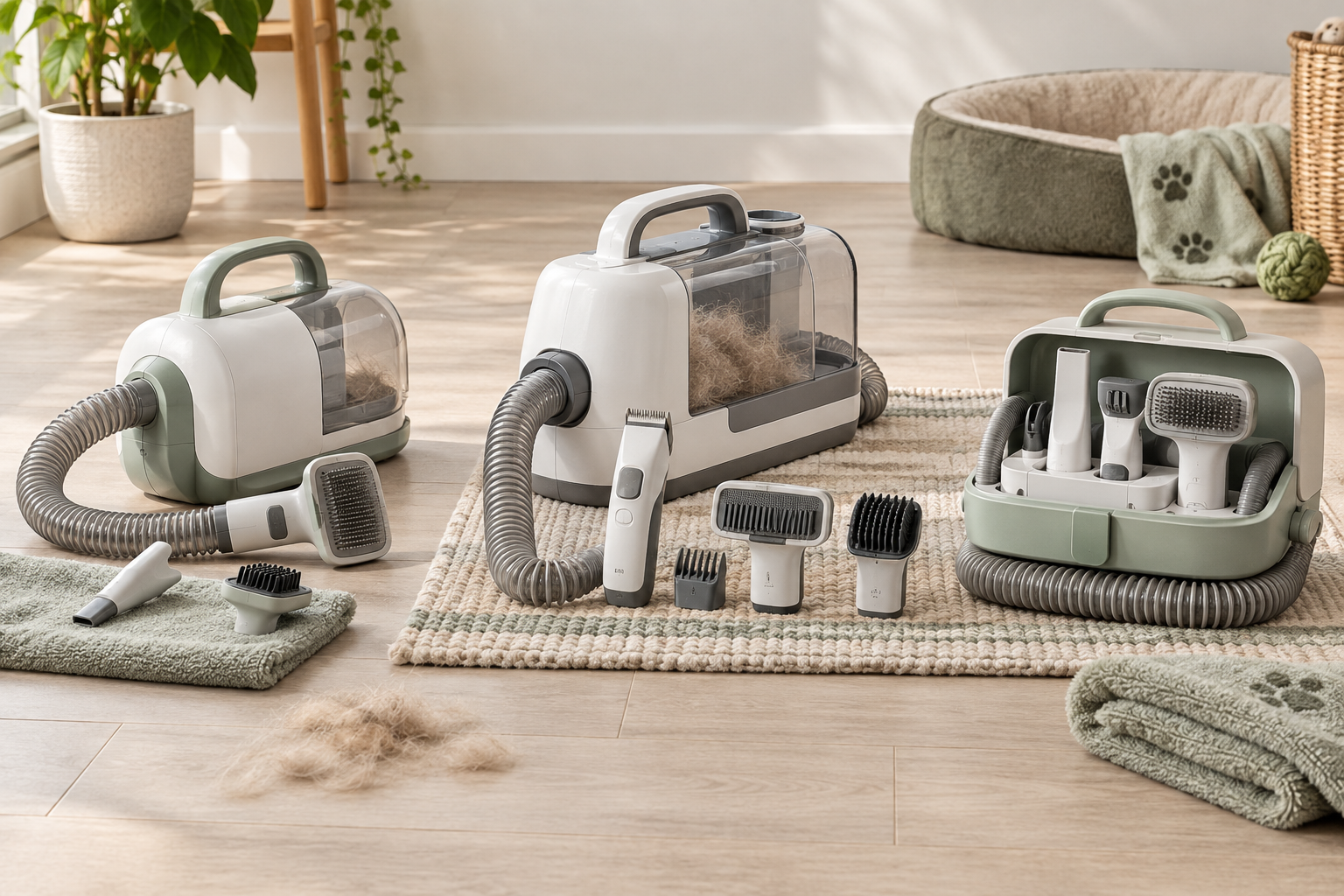
Choose a compact adjustable-suction kit when you want a simple powered collection setup, the documented grooming head fits the coat routine, and the canister is easy to empty.
Choose a larger-bin attachment kit when collection capacity and a specific compatible head matter enough to justify more storage and maintenance.
Choose a storage-focused compact kit when a measured shelf or cabinet must contain the dry hose, cord, and attachments together.
Whichever format you consider, pet tolerance is a gate—not a feature to work around. A vacuum cannot make an unwilling pet accept grooming, remove severe mats safely, diagnose coat changes, or replace advice from a veterinarian or qualified groomer.
Check the Grooming Routine Before Buying
Start with the coat-care guidance you already follow. Identify the manual tool and contact style your pet accepts, the amount of loose hair normally collected, session length, working location, nearby outlet, and storage space. Then compare the exact vacuum's stated pet and coat uses. Do not assume every included brush, rake, clipper, or nozzle suits every coat.
Sound descriptions and suction labels are not standardized proof of comfort. If a listing supplies measured information, check how it was measured and whether settings differ. More useful at home is a conservative acceptance plan: keep the unit off and at a distance at first, avoid forcing contact, and stop if your pet moves away, hides, freezes, vocalizes, pants unusually, struggles, swats, snaps, or otherwise shows distress. Ask a qualified trainer or groomer for help when handling is difficult.
For tight mats, painful areas, wounds, inflamed or broken skin, sudden coat loss, persistent itching, parasites, swelling, or other health changes, stop home grooming and contact a veterinarian or qualified professional. A collection appliance is not a treatment.
How the Three Configurations Differ
Compact adjustable-suction kits
This format centers on a small canister, flexible hose, one or more grooming heads, and selectable suction. Compare the full suction-control method, hose connection, working reach, brush width, bin release, filter access, cord length, and complete stored dimensions. A compact body is easier to place, but a smaller bin may need more frequent emptying.
Choose it only if the core grooming head—not the total accessory count—matches the documented routine. Skip it when the hose pulls against your hand position, the bin is awkward to open without spilling hair, or the controls cannot be reached without leaving the pet.
Larger-bin attachment kits
A larger canister can hold more collected hair before emptying and may arrive with several heads. That does not make every attachment useful. List the one or two tools you would actually use, verify their edges, working width, intended coat use, cleaning method, and replacement path, then measure the canister and hose together.
Clipper-style attachments add blade care, guards, charging or cord management, and technique questions. Do not choose a bundle for clippers unless the exact instructions fit your pet and you already know how to use them safely; otherwise ask a professional groomer.
Storage-focused compact kits
Some kits provide an integrated dock, slots, or a case for tools and hose. Compare the dimensions with every attachment stored, whether the hose must bend tightly, whether clean tools remain separated from collected hair, and whether filters and washed parts can dry fully outside the closed storage area.
This configuration can reduce loose parts, but it is a poor fit if sharp or small attachments remain exposed to pets or children. Integrated storage also does not help if the canister itself is hard to carry, empty, or clean.
A Practical Buying Checklist
- Pet and coat guidance: Confirm the maker identifies the intended animal and coat uses for the exact grooming head.
- Acceptance and control: Prefer controls you can reach easily and a setup that lets you stop immediately without tangling the hose or cord.
- Hose reach: Measure from a stable canister location to the entire working area without stretching, pulling, or routing across a pet's escape path.
- Attachment geometry: Compare working width, edge shape, contact points, guards, and how hair is released or drawn into the hose.
- Collection bin: Check stated capacity, fill guidance, release direction, seals, emptying path, and whether loose hair can be removed without reaching near powered parts.
- Filters and airflow path: Follow the exact cleaning and replacement instructions; do not infer washable filters or maintenance intervals.
- Complete footprint: Measure the canister, hose, cord, dock, and tools in the position they will actually occupy.
- Return terms: Because pet tolerance is uncertain, review the current seller and manufacturer terms before use.
Do not rank a system by a single noise, suction, or accessory number. Those details only matter when the measurement is current, comparable, and connected to a routine your pet already accepts.
Cleaning, Drying, and Storage Are Part of the Purchase
After each permitted use, turn off and unplug the unit as directed before opening the bin or removing tools. Empty collected hair in a controlled place, inspect attachment openings, and clean only the parts and surfaces identified in the current manual. Keep water away from motors, plugs, cords, and any part not explicitly described as washable.
Let washed filters, bins, brushes, guards, and other permitted parts dry fully before reassembly. Store the unplugged unit where a pet cannot chew the hose or cord, knock over the canister, or reach small attachments. Keep blade-style tools guarded and inaccessible. If the complete dry kit does not fit the proposed shelf or cabinet, the product is not a compact fit for your home.
For dry-tool organization, compare pet grooming supply organizers for small bathrooms. Electrical tools and damp components may need separate storage rather than an open caddy.
Who Should Skip a Grooming Vacuum?
Skip every powered format when your pet is distressed by the sound, hose, airflow, or handling; a manual brush already works; coat guidance is unclear; severe mats or skin changes are present; or a professional grooming routine is the safer choice.
Skip the compact basic kit when the small bin interrupts every session or the short hose makes positioning awkward. Skip the larger-bin bundle when most attachments duplicate tools you own, the canister exceeds your lifting or storage limits, or clipper maintenance is outside your routine. Skip the storage-focused kit when the dock keeps damp parts enclosed or leaves small tools accessible.
For a quieter, simpler category, compare manual brush formats for routine coat cleanup. For hair already on furniture or bedding, use the separate surface hair-remover guide; grooming attachments are not upholstery tools.
Bottom Line
Choose a pet grooming vacuum only after the powered format passes the pet-tolerance and coat-fit decision. A compact adjustable-suction kit suits a small basic routine, a larger-bin kit suits owners who genuinely need its capacity and compatible tools, and a storage-focused kit suits a measured space. Verify the exact current listing and manual, plan every cleaning step, and skip the category when a manual tool or professional help fits better.