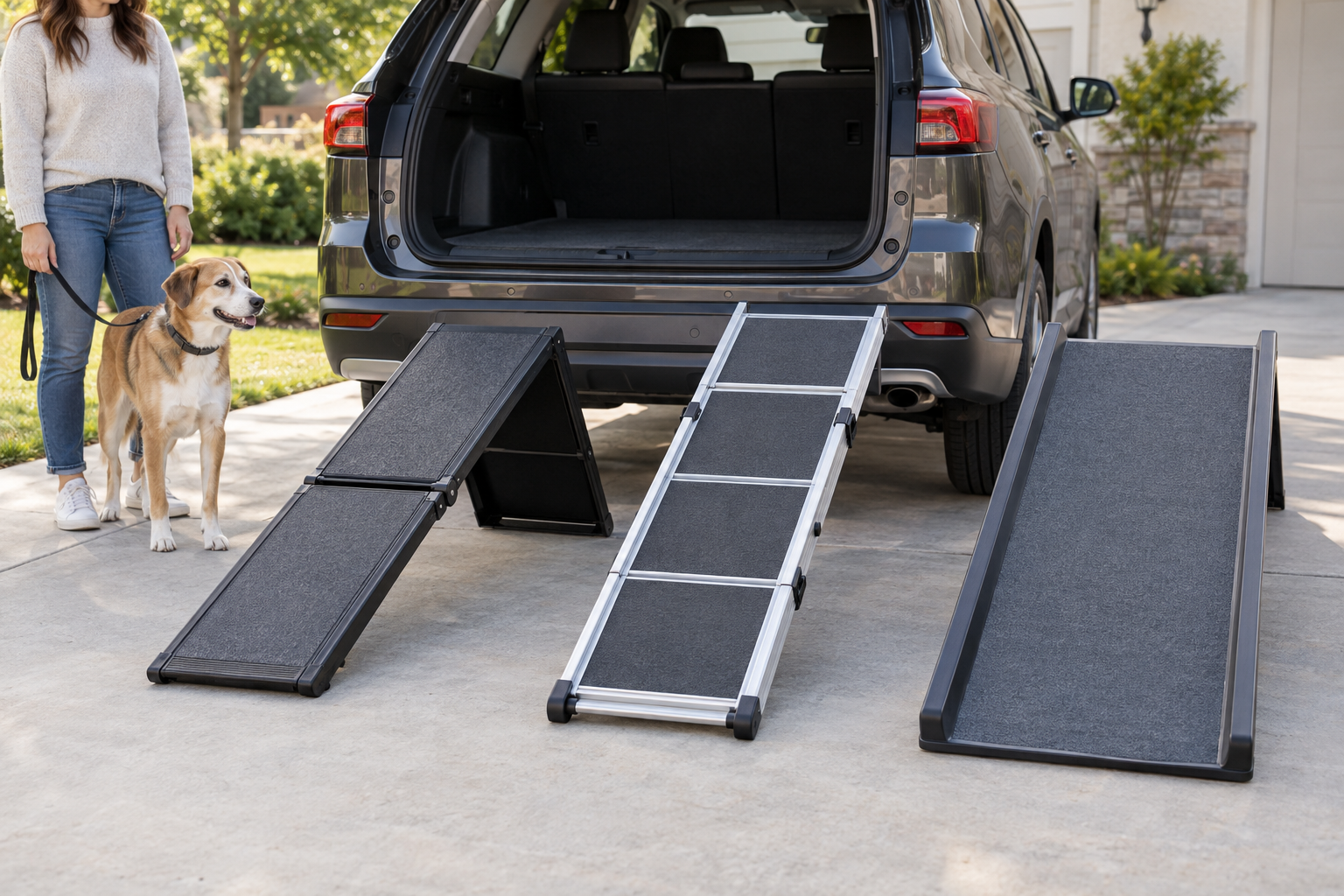
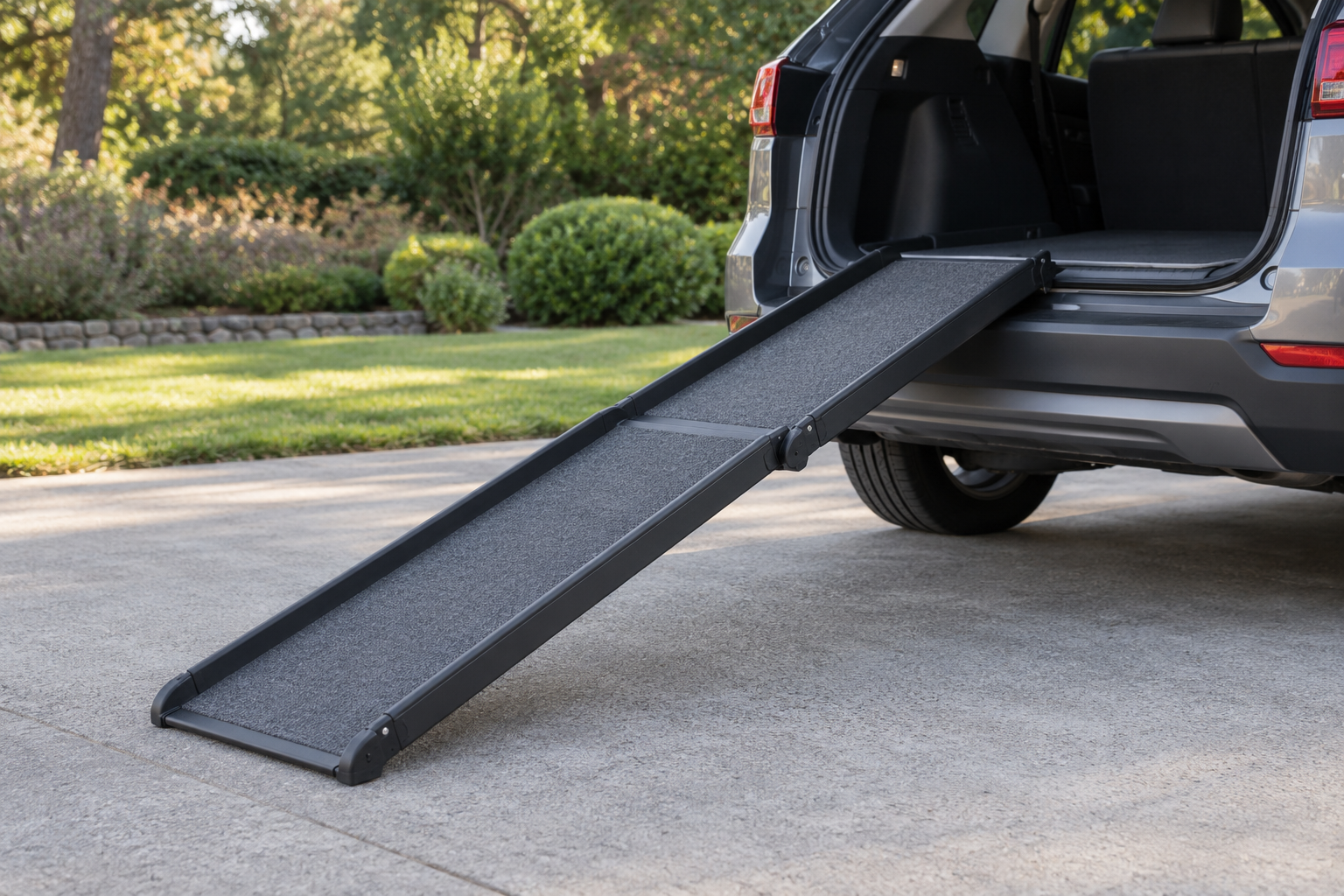
 Bi-fold vehicle ramps
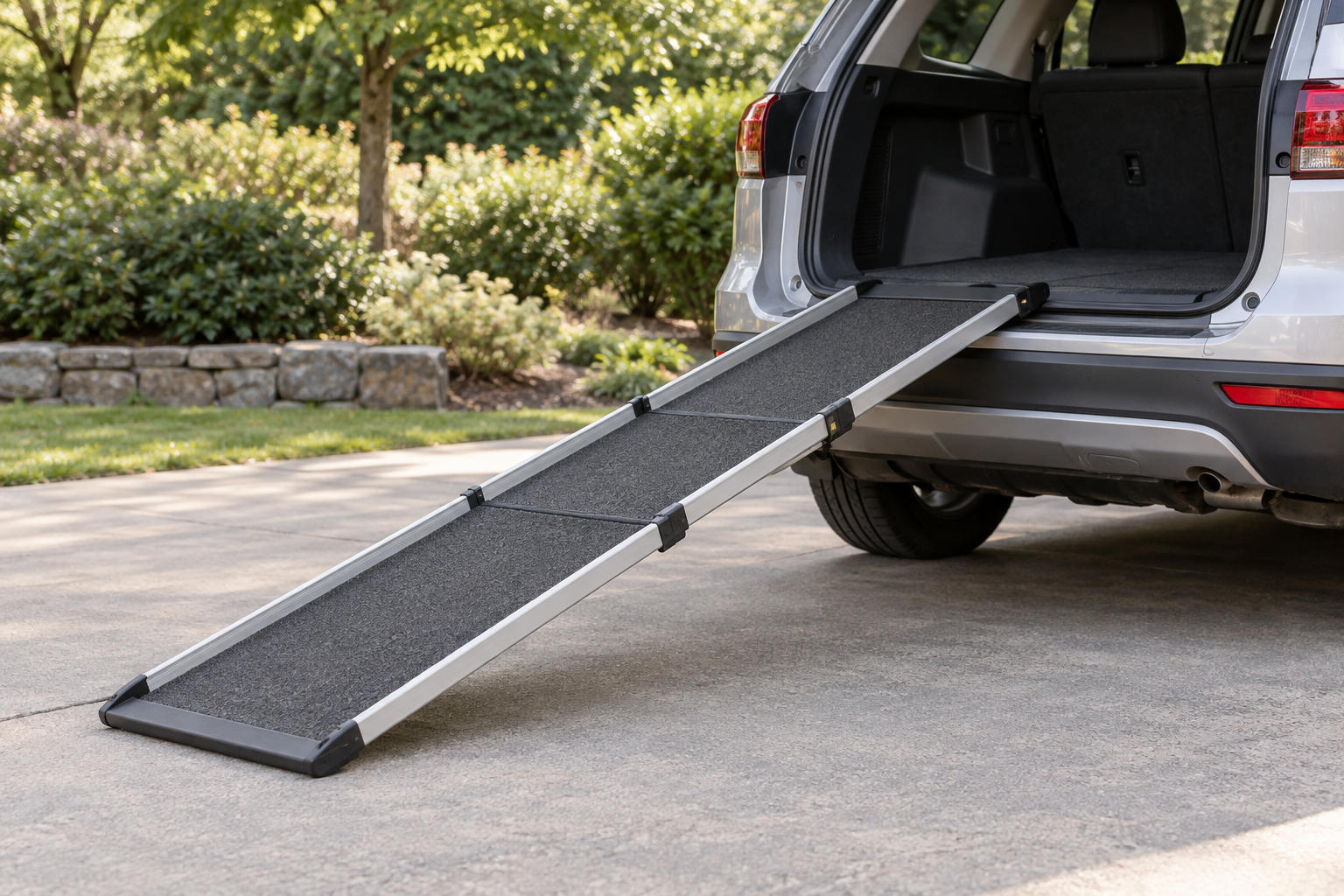 Telescoping vehicle ramps
Quick Answer
Choose a bi-fold format when you can safely manage the full panel, hinge, latch, and measured stored footprint. Choose a telescoping format when documented extension positions fit the approach space and its nested sections remain manageable to carry and clean. Choose a wide lightweight panel when usable width is the main fit issue and the full stored length fits your vehicle.
A ramp is access equipment, not a restraint, treatment, rehabilitation device, or guarantee against a fall. Use it only with a stationary vehicle on a suitable level surface and exactly as the current manufacturer directions describe. If a dog has pain, weakness, balance changes, sudden reluctance to move, or a new problem entering the vehicle, pause shopping and ask a licensed veterinarian what access and activity are appropriate.
Measure the Parked Vehicle Before Shopping
Measure the vertical loading height from level ground to the intended vehicle contact point. Then measure the clear approach distance behind the parked vehicle without entering a roadway or blocking a walking route. A longer ramp may create a gentler geometric angle, but only when its approved contact points and full footprint fit the actual setup.
Record the cargo opening, the flat space available for the packed ramp, and any threshold lip, bumper contour, hatch hardware, sensors, trim, or doors near the intended contact area. Compare those numbers with a maker's diagrams. Labels such as “SUV ramp,” “universal,” “extra wide,” and “lightweight” are not measurements.
Measure the dog's body width at its broadest comfortable point and compare it with the documented usable walking surface—not the outside frame width. The maker-stated load is a separate check. Never infer capacity from material, appearance, or a photo, and do not treat a high stated limit as proof that the setup suits a particular dog.
Bi-Fold, Telescoping, or Wide Panel?
Bi-fold ramp
A bi-fold model opens into a broad route with a hinge near the center. Check deployed and folded dimensions, how the hinge stays open, where fingers and paws must remain clear, whether a carry latch secures the folded ramp, and whether the complete panel is comfortable to lift. Quick setup is only useful if the top contact, lower feet, hinge position, and stated height range match the measured vehicle.
Telescoping ramp
Telescoping sections slide within one another. Compare each documented extension range, how the sections lock or remain set, overlap at each position, complete nested length, and cleaning around tracks or sliding surfaces. Do not improvise a length between approved positions or assume adjustability means universal compatibility.
Wide lightweight panel ramp
This category prioritizes usable walking width and carrying weight while keeping relatively few moving sections. “Wide” and “lightweight” are comparative listing terms, so use exact numbers. A full-length panel can be awkward in a small cargo area even when it is easy to lift, and lighter construction does not establish rigidity, grip, or suitability.
What to Verify on the Current Listing and Manual
- Deployed geometry: exact length, usable width, outside width, stated height range, and required approach space.
- Packed fit: stored dimensions, product weight, handle position, latch, and a secure in-vehicle storage plan.
- Vehicle contact: approved top contact, lower feet, attachment if any, surface restrictions, and prohibited placements.
- Walking surface: tread material, gaps, transitions, side-edge height, cleaning, drying, and replacement guidance.
- Moving parts: hinge, lock, slide, latch, pinch-point instructions, and inspection criteria.
- Limits and support: stated load and conditions, warranty, replacement parts, seller identity, and return terms.
Reject a listing when dimensions, the manual, vehicle-contact directions, or limitations are missing or contradictory. Marketing photos cannot verify your sill height, dog fit, approach angle, surface grip, or ability to carry the product.
Plan Setup, Cleaning, and Storage
Practice the approved setup without the dog present. Keep the dog secured away from the moving ramp, hatch, hinges, sliding sections, and traffic while placing it. Confirm both contact areas as directed, keep the route clear, and never hold a ramp in place by hand while asking a dog to cross.
If the maker permits introductory practice, begin on the ground in a quiet controlled area and allow the dog to approach voluntarily. Stop if the dog freezes, scrambles, jumps sideways, tries to escape, or appears distressed. Do not pull a leash, force movement, or use food to coax a worried dog toward an elevated vehicle setup. A qualified positive-reinforcement trainer can help with ordinary familiarization; pain, weakness, gait, or balance concerns belong with a veterinarian.
Clean the tread, frame, feet, contacts, hinges, and sliding sections only as directed. Mud, grit, fur, moisture, and road debris can hide wear or interfere with moving parts. Let the ramp dry before packing it and inspect for cracks, bends, loose hardware, damaged tread, unreliable locks, or worn contacts before every use.
Who Should Skip a Vehicle Ramp?
Skip the purchase when the vehicle can park only where the full approach enters traffic, the ramp cannot contact the vehicle as directed, the packed product cannot be secured, or its weight and dimensions exceed what you can control. Also skip it when a simpler established access routine already works and the ramp would add bulky equipment unlikely to be used.
Do not use a new product as a workaround for pain, mobility loss, panic, or difficult handling. If professional guidance indicates that a ramp is not appropriate, ask about an access plan suited to the individual dog and vehicle rather than changing products repeatedly.
Continue the Vehicle-Access Decision
For a direct mechanism comparison, see roll-up vs folding pet ramps. If you are still deciding whether to add access equipment, use the pet steps and ramps worth-it guide. The pet outing setup guide connects vehicle access with carriers, water, cleanup, and travel storage.
Bottom Line
Start with sill height, clear approach, usable ramp width, packed storage, and the weight you can handle. Compare current instructions for contact points, setup, locks, tread, cleaning, inspection, and limits. Choose the simplest documented format that fits the parked vehicle and a calm willing dog—and skip any vague listing or forced setup.